Body Scrub vs Exfoliating Gloves: Which Better?
When it comes to achieving smooth, glowing skin, both body scrubs and exfoliating gloves can help remove dead skin cells. However, for a more gentle yet effective exfoliation, exfoliating gloves often come out on top by offering controlled pressure and preventing over-scrubbing, which can be common with some body scrubs.
Choosing the right exfoliation tool depends on your skin type and what you’re hoping to achieve. While scrubs can be great for tackling rough patches, gloves provide a consistent buffing action. We found that understanding the differences helps you pick the perfect match for your skincare routine and avoid irritation.
- Exfoliating gloves offer controlled, gentle exfoliation.
- Body scrubs can be more intense and risk over-scrubbing.
- Gloves are great for sensitive skin.
- Scrubs might be better for very rough, calloused areas.
- Your skin type should guide your choice.
Let’s dive deeper into how each method works and which one might be your skin’s new best friend.
Body Scrub vs. Exfoliating Gloves: A Deep Dive
So, you’re looking to get rid of that dull, flaky skin and reveal a radiant glow, right? It’s a common goal, and two popular methods are body scrubs and exfoliating gloves. We’ve looked into how each works and found that your best choice really depends on your skin’s unique needs and your personal preferences.
Both are designed to buff away dead skin cells, but they go about it in different ways. Understanding these differences can help you avoid irritation and get the best results for your skin. Let’s break them down.
Understanding Body Scrubs
Body scrubs are essentially an abrasive mixture applied to your skin. They usually contain a base (like oil, lotion, or gel) mixed with granular particles. These particles are what do the scrubbing work. Think of them as tiny exfoliators suspended in a creamy or oily medium.
The Ingredients Behind the Scrub
The magic (or sometimes, the irritation) of a body scrub comes from its exfoliating agents. These can range from fine sugar crystals to coarser salt grains, or even seeds and nut shells. The base ingredient, like shea butter or coconut oil, can also add moisturizing benefits.
Common Exfoliating Agents
- Sugar Scrubs: Sugar is generally a gentler exfoliant. Its crystals are rounded, making them less likely to cause micro-tears in the skin.
- Salt Scrubs: Salt crystals are often sharper and can offer a more intense exfoliation. They can also have mineral benefits.
- Seed & Nut Shell Scrubs: These can be quite abrasive. We found that very rough particles might be too harsh for delicate skin.
- Jojoba Beads or Microbeads: These are smoother, man-made particles. However, microbeads have faced environmental concerns and are being phased out in many places.
How Scrubs Work on Your Skin
When you rub a body scrub onto damp skin, the particles physically slough off dead skin cells. The base helps to lubricate the skin, making the process smoother. It’s a bit like using a fine-grit sandpaper to smooth a rough surface. You can control the pressure, but it’s easy to apply too much.
Potential Drawbacks of Scrubs
One common issue is over-exfoliation. Because you’re applying the scrub with your hands, it’s easy to press down too hard, especially on sensitive areas. This can lead to redness, irritation, or even tiny abrasions. Also, some scrub particles might not rinse away completely, potentially clogging pores.
Exploring Exfoliating Gloves
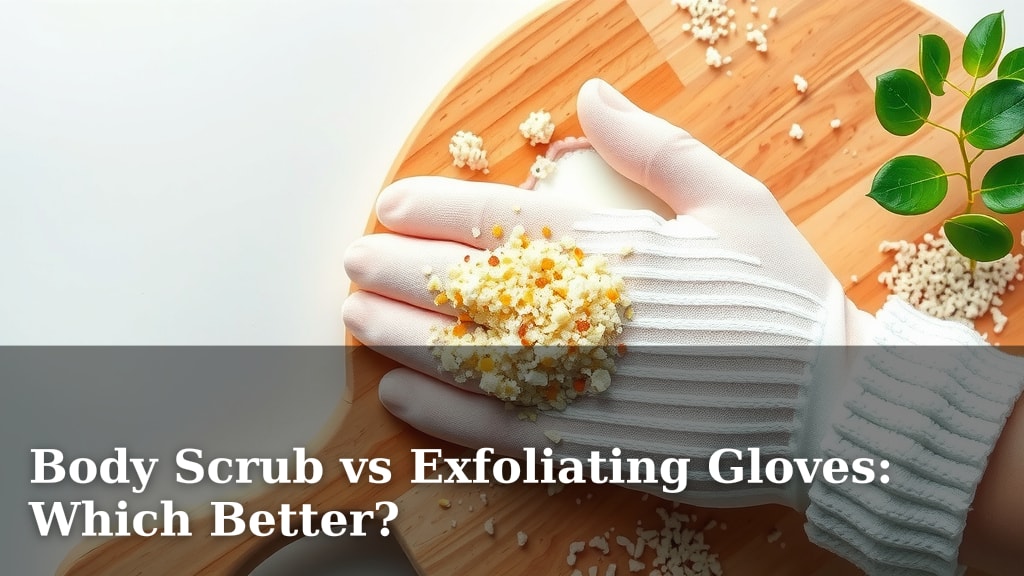
Exfoliating gloves, often made from materials like nylon, rayon, or silicone, offer a different approach. You slip them onto your hands and use them with your regular body wash or soap. Their texture is designed to create friction and lift away dead skin cells.
The Texture and Material Matter
The effectiveness of an exfoliating glove largely depends on its material and weave. Some have a very fine texture, similar to a washcloth, while others are much rougher, like a loofah. The goal is to create enough friction to dislodge dead skin without causing damage.
Types of Exfoliating Glove Materials
- Nylon/Rayon Weaves: These often provide a good balance of exfoliation and gentleness. They tend to lather well with soap.
- Silicone: Silicone gloves offer a more unique texture. They can be very hygienic and are great for sensitive skin, providing a stimulating massage.
- Natural Fibers: Some gloves use materials like loofah or plant-based fibers. These can be effective but may vary in coarseness.
How Gloves Exfoliate
When you use an exfoliating glove with cleanser, the combination of soap lather and the glove’s textured surface effectively buffs away dead skin. The glove’s design helps you maintain a more consistent pressure across larger areas. This controlled friction is key to effective exfoliation.
Benefits of Using Gloves
Exfoliating gloves are often praised for their ability to offer controlled exfoliation. It’s much harder to scrub too hard with a glove than with your bare hands holding a handful of scrub. This makes them a fantastic option for those with sensitive skin or anyone prone to irritation. They also tend to rinse very clean, leaving little residue.
Head-to-Head: Which Tool Wins for You?
Now that we’ve looked at each option, let’s compare them directly. Think about your skin type and what you want to achieve. Are you dealing with tough, calloused heels, or is your skin generally delicate and prone to redness?
We found that the best tool is often the one that gives you the desired results without causing discomfort. It’s not about one being universally “better,” but rather which is better for *your* skin in *this* moment.
| Feature | Body Scrub | Exfoliating Glove |
|---|---|---|
| Exfoliation Intensity | Can range from mild to intense, depending on particles. | Generally moderate and controlled. |
| Control Over Pressure | Can be difficult; easy to over-scrub. | Good control; easier to maintain consistent pressure. |
| Suitable For Sensitive Skin | Risky; depends heavily on ingredients. | Often a good choice, especially gentler weaves. |
| Ease of Use | Requires scooping and massaging product. | Slip on and go with body wash. |
| Potential for Clogging Pores | Yes, if particles or oils don’t rinse fully. | Low; rinses clean easily. |
| Added Benefits | Moisturizing base ingredients. | Can improve lather; hygienic. |
When to Reach for a Body Scrub
If you have particularly rough patches on your elbows, knees, or heels, a coarser body scrub might be your go-to. They can effectively tackle built-up dead skin. Many people also enjoy the sensory experience of using a scrub, the scent, and the feeling of rich oils.
When Exfoliating Gloves Shine
For daily exfoliation or for skin that’s on the sensitive side, gloves are often the winner. Their consistent texture helps prevent you from going too hard. They are also incredibly easy to use in the shower and rinse out cleanly.
Think of it this way: a scrub is like using a specialized tool for a tough job, while a glove is your everyday hero for maintaining smooth skin. Many experts suggest that if you’re new to exfoliating, starting with a gentler glove is a wise move (Cleveland Clinic).
Making Your Choice: A Quick Checklist
To help you decide, consider these points:
- Your Skin Type: Is it sensitive, dry, oily, or normal?
- Area to Treat: Are you targeting rough spots or overall body smoothness?
- Desired Intensity: Do you need a deep scrub or a gentle buff?
- Your Routine: How much time do you have? Gloves are fast!
- Product Preference: Do you prefer the feel of oils and grains or lather and texture?
- Budget: Both can be budget-friendly, but glove reusability adds value over time.
Conclusion
You’ve learned how body scrubs and exfoliating gloves work differently. Scrubs offer varied intensity with different grains, while gloves provide controlled, consistent buffing. We found that your skin type and goals are key. For rough patches, a scrub might be best. For sensitive skin or daily smoothing, gloves often win. Your best bet is choosing the tool that gives you radiant skin without irritation. So, try one and see how your skin feels!
Frequently Asked Questions
Can I use an exfoliating glove every day?
For most skin types, daily exfoliation with a glove is usually too much and can lead to irritation. We recommend starting with 2-3 times a week and seeing how your skin responds. Listen to your skin; if it feels red or sensitive, reduce frequency.
Are exfoliating gloves hygienic?
Yes, exfoliating gloves can be very hygienic when cared for properly. They are typically made of materials that rinse clean easily. Make sure to rinse your glove thoroughly after each use and allow it to air dry completely to prevent bacterial growth.
What if my skin is very sensitive?
If you have sensitive skin, exfoliating gloves are often a better choice than body scrubs. Look for gloves made from softer materials like fine nylon weaves or silicone. Avoid rougher textures and always use gentle pressure.
Can body scrubs be too harsh for my face?
We strongly advise against using most body scrubs on your face. Facial skin is much more delicate than body skin. The abrasive particles in body scrubs can cause micro-tears and significant irritation on your face. Always use products specifically designed for facial exfoliation.
How often should I replace my exfoliating glove?
The lifespan of an exfoliating glove varies depending on the material and how often you use it. Generally, it’s a good idea to replace your glove every 3-6 months. If you notice it starting to wear out, lose its texture, or smell off, it’s time for a new one.