10 oz Gloves vs 14 oz Gloves: Training, Sparring & Performance Compared
If you’ve ever stepped into a boxing gym, you’ve probably noticed that fighters wear different sized gloves depending on what they’re doing. You might have wondered why someone training for a match would pick lighter gloves while another person is wrapping up 14-ounce heavyweights. It’s not just about personal preference—there’s actually some real science and practical reasoning behind these choices. Let me walk you through the differences between 10 oz and 14 oz gloves so you can figure out which ones make sense for your training goals.
Understanding Boxing Glove Weight: More Than Just Numbers
Here’s the thing about boxing gloves—the weight isn’t arbitrary. These numbers represent the ounces of padding and material wrapped around your hand and wrist. When you’re comparing 10 oz gloves to 14 oz gloves, you’re essentially looking at four extra ounces of protection and cushioning. That might not sound like much, but when you’re throwing hundreds of punches in a training session, that difference becomes noticeable pretty quickly.
Think of it like this: if you’ve ever carried a backpack that’s just slightly too heavy, you understand how small incremental weight can affect your overall performance and endurance. The same principle applies to boxing gloves.
What Are 10 oz Gloves Used For?
Ten-ounce gloves are typically considered competition-level gloves. They’re the lighter option, and that’s intentional. Here’s why fighters and serious trainers gravitate toward them.
Speed and Responsiveness
When you’re wearing 10 oz gloves, your hands feel faster. There’s less weight to move around, which means your punch combinations flow more naturally. If you’ve been training hard, you know that hand speed is crucial in boxing. Lighter gloves allow you to snap your jabs and crosses with greater velocity because there’s less mass slowing down your arm movement.
Competition and Match Training
Most amateur and professional boxing matches require specific glove weights depending on the fighter’s weight class and the event rules. Ten-ounce gloves are standard in many competition settings, particularly for lighter weight classes. If you’re preparing for an actual fight, training with the same gloves you’ll wear in the ring just makes sense.
Technical Development
Lighter gloves force you to develop better technique. Why? Because you can’t rely on the extra padding to absorb and hide sloppy punches. Your footwork needs to be sharper, your angles more precise, and your timing more accurate. It’s like the difference between learning to write on lined paper versus blank paper—the blank paper forces you to be more deliberate.
What Are 14 oz Gloves Used For?
Fourteen-ounce gloves are the training workhorses of the boxing world. They’re heavier, more padded, and designed with protection and durability in mind.
Sparring and Partner Safety
This is probably the biggest reason why 14 oz gloves are so popular for sparring sessions. The extra padding disperses impact over a wider area, which means your sparring partner takes less damage when you land a solid punch. If you’ve ever sparred, you understand that the goal isn’t to hurt your partner—it’s to work on your combinations, defense, and ring movement in a live setting. Fourteen-ounce gloves make that safer environment possible.
Wrist Support and Injury Prevention
The additional weight in 14 oz gloves comes partly from extra padding and partly from reinforced wrist support. This heavier construction means less stress on your wrist joints during impact. If you’re training frequently, this matters. Wrist injuries can sideline you for weeks or even months, and the preventative benefits of heavier gloves are worth considering seriously.
Extended Training Sessions
Here’s something counterintuitive: even though 14 oz gloves are heavier, many trainers recommend them for longer training sessions. Why? The extra padding reduces hand fatigue because there’s more cushioning absorbing the impact. Your hands tire less quickly, which allows you to train longer and maintain form throughout your session.
Direct Comparison: 10 oz vs 14 oz Gloves
Weight and Feel
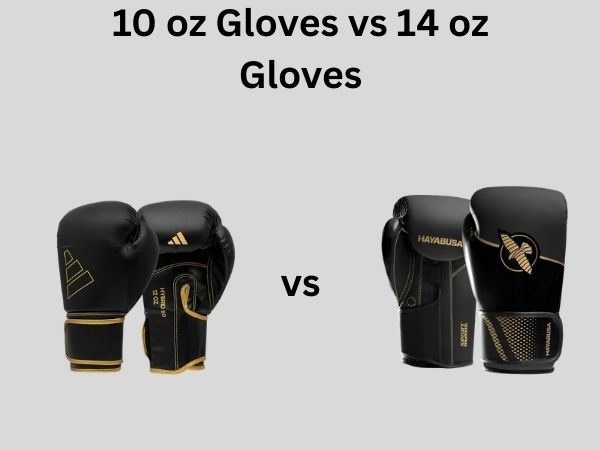
The four-ounce difference might seem small, but it’s significant when you’re wearing gloves on both hands. You’re essentially wearing an extra eight ounces total. Ten-ounce gloves feel noticeably lighter and more responsive. Fourteen-ounce gloves feel more substantial, almost like wearing protective armor.
Hand Speed Comparison
Let me be direct: 10 oz gloves will allow you to punch faster. The lighter weight means less rotational inertia when you rotate your shoulders and throw combinations. In competitive boxing where milliseconds matter, this advantage is real. However, if you’re training with 14 oz gloves consistently, your punch speed still improves—you’re just working against additional resistance, kind of like strength training.
Protection Levels
Fourteen-ounce gloves offer more protection for both the person wearing them and their training partner. The thicker padding absorbs more impact force. Ten-ounce gloves still protect your hands, but they’re designed with the assumption that you’re training or competing with someone of similar skill and control. They’re not ideal for beginners sparring with experienced fighters.
Padding Composition
Both glove types use padding, but the distribution differs. Ten-ounce gloves have padding concentrated in key impact zones. Fourteen-ounce gloves have padding distributed more uniformly throughout the glove to maximize protection during extended use.
Training Considerations: Which Should You Choose?
Your Experience Level
If you’re brand new to boxing, start with 14 oz gloves. You’re still learning proper technique, and the extra protection helps you build confidence without worrying excessively about hand injuries. As you progress and develop better form, you can transition to 10 oz gloves for specific training sessions.
Type of Training
Here’s a practical breakdown:
- Heavy bag work: Either weight works, though some trainers prefer 10 oz for speed development and 14 oz for conditioning
- Sparring: Generally use 14 oz to protect your partner
- Speed and combination drills: Ten-ounce gloves are ideal
- Shadow boxing: Either works, though lighter gloves are preferable for hand speed
- Partner mitt work: Fourteen-ounce gloves are safer for the mitts holder
Your Boxing Goals
Are you training to compete? If so, practice with 10 oz gloves regularly to get used to how they feel in a match situation. Are you focused on fitness and general boxing skills? Fourteen-ounce gloves might be perfect for your needs since they’re more comfortable for extended training.
Performance Impact: Speed, Power, and Endurance
Speed Development
When you wear lighter gloves, your punches naturally become faster because there’s less mass to accelerate. This doesn’t mean your punches are more powerful—that’s a common misconception. Speed and power are different qualities. Over time, training with 10 oz gloves can improve your hand speed, and when you switch back to heavier gloves, that speed advantage carries over.
Power Generation
Here’s where it gets interesting: power doesn’t come from glove weight. Power comes from your technique, core strength, leg drive, and explosive hip rotation. You can generate equal power with either glove weight if your mechanics are sound. However, 14 oz gloves feel more powerful when they land because the extra weight adds force to your strikes. But again, that’s more about the glove than about your actual punch power.
Endurance and Fatigue
Ten-ounce gloves will tire your arms faster in a training session because you’re throwing more punches at higher speed. Fourteen-ounce gloves, despite being heavier, often feel less fatiguing because you’re naturally moving slower and the impact absorption reduces stress on your muscles and joints.
Wrist Support and Joint Health
Your wrists take a beating in boxing, regardless of what gloves you’re wearing. The key difference is how much support and cushioning you get. Ten-ounce gloves offer adequate wrist support but less padding around the wrist area. Fourteen-ounce gloves provide more substantial wrist reinforcement, which is particularly important if you’re training frequently or have any previous wrist issues.
Think about it this way: your wrists are like the hinges on a door. With proper support and cushioning, those hinges last longer. Adequate support is essential, not optional.
Competition Rules and Regulations
Different boxing organizations have different requirements. Amateur boxing competitions in many regions use 10 oz gloves for lighter weight classes and progress to heavier gloves for larger fighters. Professional boxing also has strict glove weight requirements depending on fighter weight classes. Before you compete, check your specific event rules.
Some organizations require 12 oz gloves as a middle ground. If you’re serious about competing, you’ll want to train with whatever gloves your competition will mandate.
Practical Recommendations for Different Training Scenarios
For Beginners
Start with 14 oz gloves. Build your foundation, learn proper technique, and develop hand and wrist strength. Once you’ve trained consistently for at least a few months and your coach agrees, you can introduce 10 oz gloves into your training rotation.
For Sparring Partners
Use 14 oz gloves when sparring with partners. The increased padding makes sparring more enjoyable for everyone involved. Your partner will appreciate the reduced impact, and you’ll both benefit from safer, more productive training sessions.
For Competition Training
Match your training gloves to your competition gloves. Spend at least several weeks before your fight training primarily with the gloves you’ll wear in the ring. This helps you adjust to the feel, weight distribution, and how your combinations flow.
For Heavy Bag Sessions
You have flexibility here. Many boxers alternate between 10 oz and 14 oz gloves on the heavy bag. Use 10 oz when you want to focus on speed and combinations, and 14 oz when you’re emphasizing power development and longer conditioning sessions.
Cost and Value Considerations
Fourteen-ounce gloves are often less expensive than high-quality 10 oz gloves. This is partly because competition-grade 10 oz gloves require more precise manufacturing and better quality padding materials. If budget is a concern, understand that spending extra on a good pair of 14 oz training gloves is a solid investment that will last longer and serve you well.
Making Your Final Decision
The “best” glove weight for you depends on multiple factors working together. Your experience level, training goals, current fitness level, and whether you have any existing hand or wrist issues all matter. Most serious boxers end up owning multiple pairs of gloves—14 oz for sparring and long training sessions, and 10 oz for competition preparation and speed work.
If you’re just starting out, don’t overthink this. Get a solid pair of 14 oz gloves from a reputable brand, and as you progress, you’ll naturally understand when and why you might want to add 10 oz gloves to your training arsenal.
Conclusion
Ten-ounce and fourteen-ounce boxing gloves serve different purposes, and understanding these differences helps you make smarter training choices. Ten-ounce gloves are lighter, faster, and designed for competition and technical development. They demand better technique and allow for quicker combinations. Fourteen-ounce gloves provide more protection, more wrist support, and are ideal for sparring and extended training sessions. They’re safer for your training partners and kinder to your hands during long workouts.
The best approach is to use each type strategically. If you’re competing, train with 10 oz gloves to prepare. For regular training and sparring, rely on 14 oz gloves. As you gain experience, you’ll develop a feel for what works best for your specific needs. Boxing is a sport of precision and strategy, and choosing the right equipment is part of that strategic approach to improvement. Start with 14 oz gloves, develop your skills, and progress to 10 oz gloves as your experience and goals dictate. Your hands—and your training partners—will thank you.
Frequently Asked Questions
Can beginners use 10 oz gloves?
Technically yes, but it’s not recommended. Beginners should start with 14 oz gloves to develop proper technique with adequate hand and wrist protection. Once you’ve trained for several months and your coach confirms you’re ready, you can transition to 10 oz gloves. Rushing this progression increases injury risk.
Are 10 oz gloves actually lighter to wear, or does it feel the same?
You’ll definitely notice the difference. Four extra ounces per glove adds up to eight ounces total, and that’s noticeable when you’re throwing combinations. Ten-ounce gloves feel significantly lighter and allow for faster hand movement. The difference becomes even more apparent during longer training sessions.
Do 14 oz gloves make you punch harder?
Not exactly. Heavier gloves don’t increase your actual punch power—your technique and muscle strength determine that. However, the extra weight does add force to your strikes when they land. For training purposes, the real benefit of 14 oz gloves is protection and reduced hand fatigue, not increased power.
Which gloves should I use for heavy bag training?
Both can work, depending on your goal. Use 10 oz gloves when you want to practice speed and combinations at match pace. Use 14 oz gloves for longer conditioning sessions and when emphasizing power development with proper technique. Many boxers rotate between both depending on the specific training focus for that day.
Why do professional boxers sometimes use heavier gloves than competition requires?
Professional boxers train with heavier gloves than they compete with to build strength and conditioning under more challenging conditions. It’s similar to how athletes train with weighted equipment. When they finally wear their competition gloves, everything feels lighter and faster, giving them a performance advantage.
“`