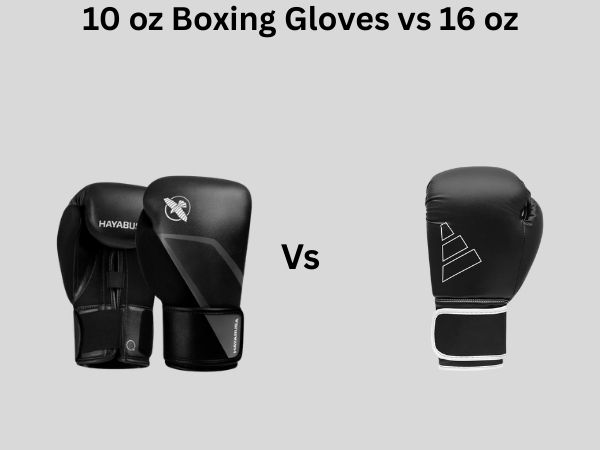
10 oz Boxing Gloves vs 16 oz: A Complete Guide to Choosing Your Perfect Pair
When you’re standing in front of a wall of boxing gloves at your local gym or scrolling through an online store, the choice between 10 oz and 16 oz can feel overwhelming. You might be wondering: which weight is actually right for me? The truth is, there’s no one-size-fits-all answer, and that’s what makes this decision so important for your boxing journey.
The difference between these two weights might seem like just six ounces, but trust me, when you’re throwing combinations for three minutes straight, those ounces add up. In this comprehensive guide, I’m going to walk you through everything you need to know about both options so you can make an informed decision that matches your specific needs and goals.
Understanding Boxing Glove Weight Categories
Before we dive into the specifics of 10 oz versus 16 oz gloves, let’s establish what we’re actually talking about when we discuss boxing glove weight. The ounce measurement in boxing gloves refers to the total weight of a single glove, not the pair. This is crucial to understand because it affects how you’ll feel the impact, control, and overall performance in the ring or during training.
Boxing gloves come in various weights, starting as light as 8 oz and going up to 20 oz or more. Each weight category serves different purposes, training styles, and experience levels. Think of it like choosing the right tool for a job—a heavier hammer isn’t always better than a lighter one if you’re doing detailed work.
The 10 oz Boxing Gloves: Speed and Agility
What Makes 10 oz Gloves Special?
Ten-ounce boxing gloves are considered the lighter end of the spectrum in terms of training and competitive use. They’re the choice of many professional boxers and serious amateurs who prioritize speed, accuracy, and hand velocity. When you slip on a pair of 10 oz gloves, you immediately notice the difference in how quickly you can move your hands and generate combinations.
The lighter weight means less momentum working against you, which translates to faster hand speed and sharper combinations. It’s like the difference between throwing a baseball and throwing a medicine ball—the baseball flies faster because you’re not fighting against as much mass. This is why speed-focused boxers absolutely love 10 oz gloves.
Advantages of Using 10 oz Gloves
- Lightning-fast hand speed and combination work
- Better for developing punching accuracy and precision
- Ideal for technical boxers who rely on movement and finesse
- Less fatigue in your arms and shoulders during extended training sessions
- Perfect for competitive sparring and amateur competitions
- Improved ability to slip and weave with minimal weight resistance
- Enhanced footwork since you’re not carrying extra weight on your hands
Disadvantages of Using 10 oz Gloves
Now, it’s important to be honest about the downsides. Lighter gloves come with their own set of challenges that you should consider carefully.
- Less padding means more impact absorption responsibility falls on your hands and wrists
- Increased risk of hand and wrist injuries without proper conditioning and wrapping
- Less protective cushioning for your training partner during sparring
- Requires more hand strength and conditioning to use safely
- Can feel harsh on the heavy bag if your technique isn’t clean
- Not ideal for beginners who are still developing proper form
The 16 oz Boxing Gloves: Power and Protection
What Makes 16 oz Gloves the Heavyweight Choice?
Sixteen-ounce gloves are the standard choice for many boxers, particularly in training environments. They offer a middle ground between the ultra-light competition gloves and the heavyweight 18-20 oz options used in heavy bag work. These gloves are like the Swiss Army knife of boxing—they’re versatile enough for multiple purposes while still offering genuine benefits.
The additional padding in 16 oz gloves provides a cushioned barrier between your hands and whatever you’re hitting. This extra mass also contributes to punch power through the added momentum, though you sacrifice some speed in the process. It’s a calculated trade-off that many boxers find perfectly balanced.
Advantages of Using 16 oz Gloves
- Superior padding and protection for both your hands and your training partner
- Excellent for sparring sessions due to enhanced impact absorption
- Ideal for beginners learning proper technique without excessive hand strain
- Greater wrist support and stability during impact
- Versatile enough for both bag work and mitt work
- Reduced risk of hand injuries during conditioning and training
- Better for developing proper power generation through technique
- Standard weight in most professional boxing organizations for heavier weight classes
Disadvantages of Using 16 oz Gloves
Of course, nothing is perfect, and 16 oz gloves have their own limitations worth considering.
- Noticeably heavier, which slows hand speed and combination work
- More arm and shoulder fatigue during extended training sessions
- Less suitable for competitive boxing at lighter weight divisions
- Can mask bad technique since the extra padding forgives sloppy form
- Takes longer to develop the hand speed that 10 oz gloves encourage
- May feel bulky for boxers with smaller hands or frames
Hand Size and Frame Considerations
Here’s something many beginners overlook: your physical frame matters significantly when choosing glove weight. If you’re a smaller person with delicate hands, 10 oz gloves might feel proportionally heavier than they would for someone with a larger build. Conversely, a larger fighter might find 10 oz gloves feel too light to provide adequate support.
Think about it this way—imagine putting on a pair of shoes designed for someone much larger than you. They might technically fit, but they won’t feel right or perform optimally. The same principle applies to boxing gloves. Your hands need to feel supported and stable, not swimming around inside oversized equipment.
Your Experience Level and Boxing Goals
For Complete Beginners
If you’re just starting your boxing journey, I’d generally recommend beginning with 16 oz gloves. Here’s my reasoning: as a beginner, you’re still developing the neuromuscular coordination and hand conditioning necessary for proper boxing. Your hands need protection while you learn, and your training partners need the extra padding while you’re developing accuracy.
Starting with 10 oz gloves as a complete beginner is like learning to drive in a race car instead of a regular sedan. Sure, some people can do it, but most people benefit from starting with the safer, more forgiving option.
For Intermediate Boxers
Once you’ve been training for six months to a year and have developed solid fundamentals, you might consider transitioning to 10 oz gloves for some training sessions. This is where many boxers start exploring both weights and figuring out what feels best for their particular style.
At this stage, you have enough conditioning that your hands can handle the lighter gloves, but you’re still building the hand speed and precision that makes 10 oz gloves truly effective. You might alternate between weights depending on your training focus for the day.
For Advanced and Competitive Boxers
Professional and serious amateur boxers typically gravitate toward 10 oz gloves because speed and precision are paramount. If you’re competing, you’re probably training in gloves that match your competition weight, which for lighter divisions means 10 oz.
However, even advanced boxers use heavier gloves for certain purposes. Many professionals do heavy bag work in 18-20 oz gloves to develop power and condition their hands, then switch to 10 oz for speed work and sparring.
Training Purpose and Session Type
Heavy Bag Training
For heavy bag work, many boxers actually prefer gloves heavier than 16 oz. The bag absorbs punishment, so the extra weight and padding protect your hands during these intense sessions. However, 16 oz can work for this purpose if that’s what you own. Ten-ounce gloves are generally too light for extended heavy bag work unless you have exceptional hand conditioning.
Speed Bag and Double-End Bag Work
The lighter bags used for speed and coordination work benefit from 10 oz gloves because you need the hand speed and responsiveness. The smaller bags don’t deliver the same impact as a heavy bag, so the reduced padding isn’t as concerning.
Mitt Work and Pad Drills
Mitt work is where both weights excel for different reasons. With 10 oz gloves, you develop faster combinations and work on accuracy. With 16 oz gloves, you develop power and the mitt holder appreciates the additional padding. Many boxers train in both weights for mitt work.
Sparring Sessions
Sparring is the area where weight choice matters most for safety. Generally, lighter weight sparring should happen in heavier gloves. If you’re doing casual, technical sparring with a less experienced partner, 16 oz is safer. Competitive sparring between boxers of similar skill and size might happen in 10 oz gloves, but this requires mutual agreement and proper headgear.
Hand Strength and Wrist Conditioning
Using 10 oz gloves effectively requires your hands and wrists to be properly conditioned. If you jump into 10 oz gloves without adequate preparation, you’re setting yourself up for repetitive strain injuries. Your hands need to be strong enough to absorb impact without the extra cushioning that heavier gloves provide.
Building hand and wrist strength takes time. It involves proper wrapping techniques, controlled training progression, and attention to form. It’s not something that happens overnight, which is why I emphasize starting with 16 oz if you’re new to boxing.
Weight Class and Competition Rules
If you’re planning to compete in organized amateur boxing, your glove weight might actually be determined by your weight class rather than personal preference. Most amateur boxing organizations have specific requirements:
- Lighter weight divisions typically require 10 oz gloves
- Heavier weight divisions may allow or require 12 oz or 16 oz gloves
- Professional boxing has its own specifications that vary by organization and weight class
If competition is in your future, it’s worth checking with your local amateur boxing federation to understand the requirements for your specific weight division. This way, you can train in the gloves you’ll actually compete in.
The Verdict: Making Your Decision
Choose 10 oz Gloves If:
- You have solid boxing experience and proper hand conditioning
- You’re training for competition in a lighter weight division
- Your boxing style emphasizes speed, accuracy, and technical skill
- You prefer lighter equipment that allows for faster hand speed
- You have larger hands and a bigger frame
- You’re doing primarily speed work and technical sparring
Choose 16 oz Gloves If:
- You’re new to boxing or still developing fundamentals
- You want maximum protection for your hands and training partners
- You’re doing general training that includes heavy bag work
- Your boxing style focuses on power and ring control
- You have smaller hands or a lighter frame
- You’re primarily doing sparring and mitt work
- You want versatility across different training methods
Practical Tips for Transitioning Between Weights
If you currently train in 16 oz gloves and want to transition to 10 oz, here’s how I’d approach it:
First, don’t make the switch overnight. Instead, dedicate specific training sessions to using 10 oz gloves. Maybe that’s one or two sessions per week initially, while you maintain your regular 16 oz training. This allows your hands and wrists to adapt gradually.
Second, focus on technique before speed when using the lighter gloves. Don’t try to blast away on the bag or go wild during mitt work. Practice clean, precise technique and let the hand speed develop naturally as your body becomes accustomed to the lighter equipment.
Third, pay attention to how your hands feel. If you experience pain, soreness, or any signs of strain, pull back and spend more time in heavier gloves. There’s no rush to transition, and pushing too hard too fast can lead to injury.
Quality and Brand Considerations
Here’s something important: not all 10 oz gloves are created equal, and not all 16 oz gloves offer the same protection. A poorly-made pair of 16 oz gloves might provide less actual padding than a well-constructed pair of 10 oz gloves. The quality of materials, construction method, and padding distribution all matter.
When shopping for boxing gloves, consider reputable brands known for quality construction. Investing in a good pair of gloves is investing in your hand health and boxing longevity. Cheap gloves with inadequate padding will leave your hands vulnerable regardless of the stated ounce weight.
Conclusion
The choice between 10 oz and 16 oz boxing gloves ultimately comes down to your experience level, training goals, physical frame, and intended use. There’s no universally correct answer—only the answer that’s right for you.
If you’re just starting out, 16 oz gloves provide the protection and versatility you need while you develop your skills. If you’re an experienced boxer preparing for competition or prioritizing speed work, 10 oz gloves offer the performance advantages you’re seeking. Many serious boxers end up using both weights for different purposes, understanding that variety in training equipment helps develop well-rounded skills.
Remember, boxing is a long-term journey. Don’t rush to lighter gloves just because you think it makes you a better boxer. Build your foundation properly with whichever weight serves your current needs, and let progression happen naturally as your skills and conditioning improve. Your hands will thank you for being thoughtful and deliberate about this decision.
Frequently Asked Questions About Boxing Glove Weight
Can I use 10 oz gloves as a beginner?
While technically possible, it’s not recommended for most beginners. Your hands need conditioning and strength that develops over several months of training. Starting with 16 oz gloves gives your hands the protection they need while you learn proper technique. Once you’ve built adequate hand conditioning—typically after six months to a year of regular training—you can explore 10 oz gloves if your goals align with their benefits.
Is there a significant difference in impact between 10 oz and 16 oz gloves?
Yes, definitely. The difference isn’t just in weight; it’s in how that weight affects impact absorption and delivery. Ten-ounce gloves have less padding, so impacts feel sharper and travel more directly to whatever you’re hitting. Sixteen-ounce gloves distribute impact over more surface area with additional padding, making impacts feel less sharp. This six-ounce difference becomes very noticeable during a training session lasting several minutes.
Do heavier gloves actually make you punch harder?
This is a common miscon