Golf Like a Pro: How to Find Golf Glove Size for Better Grip
Have you ever stepped up to the tee, only to feel your golf glove slipping around your hand like it belongs to someone else? You’re definitely not alone. Finding the right golf glove size might seem like a small detail, but trust me, it’s absolutely crucial to your game. Think of it like buying shoes—wear the wrong size, and you’ll be miserable every step of the way. The same principle applies to golf gloves.
In this comprehensive guide, I’m going to walk you through everything you need to know about selecting the perfect golf glove size. Whether you’re a seasoned golfer or just picking up the sport, understanding how to find your ideal fit will transform your grip, your confidence, and ultimately, your performance on the course.
Understanding Why Golf Glove Fit Matters So Much
Before we dive into the technical stuff, let’s talk about why this matters. A properly fitting golf glove isn’t just about comfort—though that’s certainly important. When your glove fits right, you get better control over the club. Your swing becomes more consistent. Your hands won’t slide around during your backswing, and you’ll maintain a stable grip from start to finish.
An ill-fitting glove, on the other hand, can throw off your entire swing mechanics. Loose gloves cause you to compensate by gripping harder, which leads to tension in your forearms and shoulders. This tension travels up through your body and affects your swing plane. Too tight, and you’ll experience reduced blood flow, hand fatigue, and loss of feel for the club.
The Basics: Which Hand Wears the Golf Glove?
Here’s a question that surprises many beginners: do you wear a golf glove on both hands? The answer is no. Golfers typically wear a glove only on their lead hand—that’s your left hand if you’re right-handed, and your right hand if you’re left-handed. This is the hand that needs the most grip security during the swing. Your trailing hand provides support but relies more on feel and control rather than gripping force.
Some golfers do wear two gloves in wet or humid conditions, but this is the exception rather than the rule. For now, let’s focus on sizing your primary glove correctly.
Measuring Your Hand: The First Step to Finding Your Size
Why Hand Measurements Matter
Your hand size is unique to you, just like your fingerprint. Golf glove manufacturers understand this, which is why they’ve developed a standardized sizing system. By taking accurate measurements, you’re essentially creating a blueprint for finding gloves that fit you perfectly.
What You’ll Need to Measure
To measure your hand accurately, you’ll need a flexible measuring tape—the kind tailors use works perfectly. If you don’t have one, even a piece of string and a ruler will do the trick.
The key measurement you need is your glove size. This is determined by measuring from the tip of your middle finger to your wrist crease. Sounds simple, right? That’s because it is. Here’s exactly how to do it:
- Place your hand flat on a table with your fingers straight and slightly spread
- Position your measuring tape at the tip of your middle finger
- Extend the tape to your wrist crease where your hand meets your forearm
- Record the measurement in inches
- Repeat this process on your lead hand, as it’s the one that needs the glove
Now you have your hand length. This number is your starting point for finding your glove size.
Understanding Golf Glove Sizing Charts
Standard Glove Sizes Explained
Golf gloves come in standard sizes that correspond to hand length measurements. Don’t be confused by the naming convention—these sizes aren’t as intuitive as regular clothing sizes. Let me break down what you’re looking at:
- Junior Size (XS): Hand length 6.0 to 6.5 inches
- Cadet Size (S): Hand length 6.5 to 7.0 inches
- Small (S): Hand length 7.0 to 7.25 inches
- Medium (M): Hand length 7.25 to 7.5 inches
- Medium-Large (ML): Hand length 7.5 to 7.75 inches
- Large (L): Hand length 7.75 to 8.0 inches
- Extra-Large (XL): Hand length 8.0 to 8.25 inches
- XXL Size: Hand length 8.5 inches and above
Notice how these sizes overlap slightly? That’s intentional. Different glove models and brands have their own slight variations, so having overlap gives you flexibility when shopping.
Special Sizing Categories
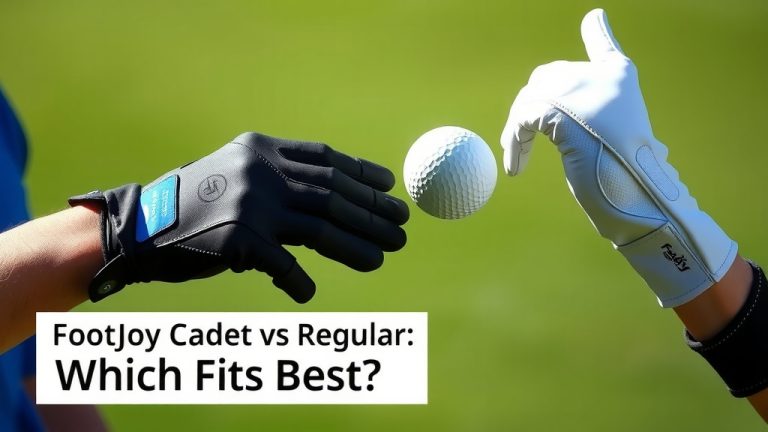
Beyond the standard sizes, there are specialized categories you should know about. Cadet sizes, for instance, are designed for golfers who have shorter hands but wider palms. These gloves have a shorter length but maintain more width, making them perfect if you’re petite but have naturally broad hands.
Similarly, some manufacturers offer petite or junior sizes for younger golfers or adults with smaller hand frames. Don’t assume you fit into the standard sizing—explore all your options.
How to Fit a Golf Glove Properly
The Physical Fit Test
Now that you know your measurement, let’s talk about how to actually test whether a glove fits well. Measurements give you a ballpark figure, but the real test is how it feels on your hand.
When you slip on a golf glove, here’s what you should be feeling:
- The glove should feel snug but never tight or restrictive
- Your fingers should move freely without excess material bunching
- The palm should lie flat against your hand with no air pockets
- Your wrist should feel supported without cutting off circulation
- You should be able to make a fist without discomfort
Think of it like this: a well-fitting glove feels like a second skin, not like you’re wearing something. You should almost forget it’s there once you’ve been wearing it for a few minutes.
The Grip Test
Here’s a test I recommend when you’re trying on gloves at a shop. Hold a golf club—or even a broomstick if they’ll let you—and take your stance. How does the glove feel as you grip? Does it allow you to maintain pressure without your fingers sliding? Can you feel the club through the material?
A glove that’s too loose will shift around as you grip the club. A glove that’s too tight will create pressure points on your fingers and palm. The perfect fit allows for secure contact without compromising your sense of touch.
Factors That Affect Your Glove Size Beyond Hand Measurements
Weather and Seasonal Considerations
Here’s something many golfers overlook: the weather affects how your glove should fit. In cold conditions, golfers often wear thermal or insulated gloves, which are naturally bulkier. You might want to go a size up in winter to accommodate the extra material without creating pressure points.
In warm weather, you might actually prefer a snug fit to prevent the glove from shifting due to sweat. Some golfers even size down by half a size during summer when they’re going to perspire more.
Glove Material Variations
Golf gloves are made from different materials, and each behaves differently. Leather gloves, particularly cabretta leather, tend to stretch slightly with wear. If you’re buying a leather glove, you might choose a slightly snug fit knowing it will stretch over time. Synthetic gloves don’t stretch as much, so aim for a fit that’s comfortable right out of the box.
Brand-Specific Differences
Here’s the frustrating truth: not all glove manufacturers follow the same sizing standards. One brand’s medium might feel different from another’s. This is why I always recommend trying gloves on before buying if possible. Online shopping is convenient, but when it comes to golf gloves, the few extra minutes spent at a golf shop trying different brands can save you from wasting money on returns.
Your Grip Preference
Some golfers prefer a firmer grip and will choose a tighter glove. Others like more movement and flexibility. Your playing style matters. If you’re someone who relies heavily on feel and finesse, you might prefer a slightly looser glove that gives you more tactile feedback. If you prioritize consistency and solid contact, a snugger fit might be your preference.
Common Glove Sizing Mistakes and How to Avoid Them
Mistake One: Only Measuring Once
Your hand size can actually change throughout the day. Your hands swell slightly as you become active and blood flow increases. They also swell in heat. For the most accurate measurement, measure your hand in the morning before activity or outdoor exposure. If you’re going to be playing golf in the afternoon, consider how your hands might have changed by then.
Mistake Two: Ignoring Wrist Comfort
I see golfers focus entirely on finger fit and forget about the wrist. The wrist area of your glove is crucial. If it’s too tight, it’ll cut off circulation and cause cramping. Too loose, and the glove will slide down your forearm during your swing. The glove should end at your wrist crease and provide gentle support without compression.
Mistake Three: Assuming Your Size Won’t Change
Your hand size can change over time due to aging, weight fluctuations, or even changes in muscle mass. What fit perfectly five years ago might not work anymore. I recommend remeasuring your hand every couple of years, especially if you’ve noticed significant life changes like weight loss or gain.
Mistake Four: Not Considering Swelling or Injuries
If you have arthritis, experience regular swelling, or have recently dealt with hand or wrist injuries, mention this to whoever’s helping you with your glove selection. These conditions might mean you need a slightly larger size for comfort, even if your base measurement suggests otherwise. Comfort is non-negotiable—a glove that causes pain will only hurt your game.
Testing Your Glove During Actual Play
The Break-In Period
New gloves often feel stiff and unfamiliar. Give yourself a few practice rounds to really understand how your glove performs. During this break-in period, you might notice the material loosens slightly—this is normal, especially with leather gloves. By the third or fourth round, you’ll have a much better sense of whether the fit is truly right for you.
What to Watch For During Play
As you’re playing, pay attention to these signals:
- Does the glove slip at all during your swing?
- Do you experience any pinching or discomfort?
- Can you maintain your grip pressure without tension?
- Does moisture—from sweat or morning dew—affect the fit?
- How does the glove feel after nine holes versus eighteen?
These real-world observations are more valuable than any fitting guide because they reflect actual playing conditions.
When to Replace Your Golf Glove
Signs Your Glove Has Worn Out
A properly sized glove will eventually wear out—that’s actually a good sign because it means you’ve been using it consistently. Most golfers replace their gloves every 12 to 18 months, depending on frequency of play. You’ll know it’s time when you notice:
- Holes or tears in the material
- Significant stretching in the fingers or palm
- Loss of grip texture or slickness where you grip
- Permanent wrinkles that affect fit
- Inability to maintain grip control
When you replace your glove, don’t assume you need the same size. Recheck your measurements—your hand might have changed, or you might have learned something about what size works best for you through actual experience.
Special Sizing Situations
For Junior Golfers
If you’re selecting gloves for a young golfer, remember that their hands grow quickly. It’s tempting to buy a larger size to get longer wear, but this is a mistake. An oversized glove will negatively impact their swing development. Buy for their current hand size and plan to replace it within a year or so. Many junior golfers start in cadet or extra-small sizes.
For Women Golfers
Women golfers should measure their hands the same way everyone else does. Don’t assume you need a smaller size just because you’re female—that’s not how this works. Some women have large hands, some have small hands. Your actual measurement is what matters. That said, some manufacturers offer women-specific gloves that are cut to match average women’s hand shapes, and these can provide an excellent fit if your measurements align.
Budget-Friendly Tips for Finding Your Perfect Fit
Premium golf gloves can be expensive, sometimes running $40 to $60 per glove. That’s a lot if you’re trying different sizes and brands. Here’s my strategy for finding your fit without breaking the bank:
- Visit a golf shop and try on multiple brands and sizes without obligation
- Ask the staff for their recommendations based on your hand measurements
- Purchase one glove in your preferred size from the most affordable brand
- Use this as your test glove through several rounds
- Only once you’ve confirmed the fit, invest in premium gloves if desired
- Keep an eye out for end-of-season sales when stores clear inventory
- Consider buying gloves in packs, which often offer discounts
Online Shopping Tips If You Can’t Visit a Store
Not everyone has access to a golf shop nearby. If you’re buying online, take these precautions:
- Check the return policy before purchasing—make sure you can return or exchange if the fit isn’t right
- Read customer reviews specifically looking for comments about fit and sizing
- Compare multiple reviews to see if people consistently mention running large, small, or true to size
- Contact the manufacturer’s customer service with your hand measurements for personalized recommendations
- Order from retailers that are known for generous return policies
- Buy a single glove first rather than ordering a multi-pack
Conclusion
Finding your golf glove size is one of those foundational skills that separates casual golfers from serious players who take their game seriously. It’s not complicated—measure your hand, compare to sizing charts, and test before committing to multiple gloves. What seems like a minor detail now will pay dividends in your consistency, comfort, and confidence on the course.
Remember, the perfect glove fit isn’t