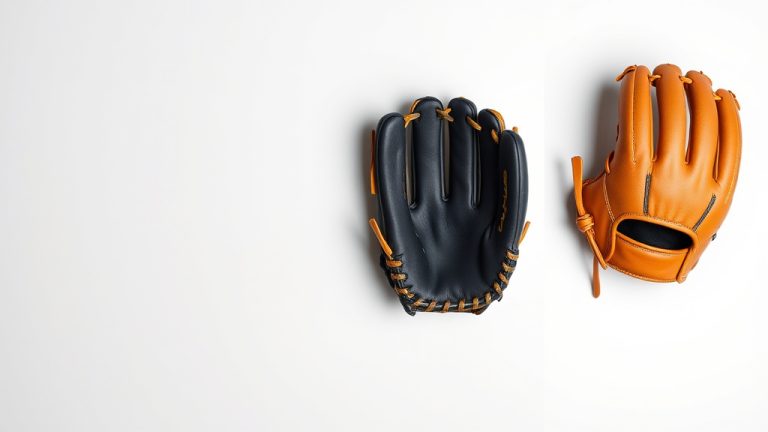
How to Find the Right Baseball Glove Size
Determining your baseball glove size is all about measuring your hand and knowing the right glove length for your position. Most adult baseball gloves range from 11 to 12.5 inches. The perfect fit ensures better control and a quicker transfer of the ball.
Finding the right glove size can make a huge difference on the field. A glove that’s too big or too small will hinder your game. We’ve researched the key factors like player age, position, and hand measurements. Getting this right means you’ll feel more confident and effective in the field.
- Measure your hand from the tip of your longest finger to the heel.
- Check glove size charts based on your position (infield, outfield, pitcher, catcher).
- Consider the glove’s pocket depth and break-in period.
- A properly sized glove improves fielding performance.
Below, we’ll walk you through exactly how to measure your hand and find the perfect glove size for your needs.
Figuring Out Your Perfect Baseball Glove Size
Choosing the right glove size isn’t just about looking cool on the field. It’s about performance and how quickly you can snag that fly ball or scoop up that grounder. A glove that fits like a dream helps you control the ball better and makes for a faster transfer to your throwing hand. We’ve looked into what makes a glove the right size for you, and it really boils down to a few key things.
The “Measure Twice, Buy Once” Approach
The most reliable way to start finding your glove size is to measure your hand. This gives you a solid baseline number. You’ll want to get a flexible measuring tape for this. If you don’t have one, a piece of string and a ruler will work just fine. It’s all about getting an accurate measurement so you can compare it to glove charts.
How to Measure Your Hand
First, lay your dominant hand flat on a piece of paper. Spread your fingers slightly, but keep them together. Don’t make a tight fist. You’re looking for a relaxed, natural position. Imagine you’re about to catch a ball.
Next, use your measuring tape or string to measure from the tip of your longest finger straight down to the heel of your palm. This is the longest point of your hand. Make sure you mark the start and end points clearly if you’re using string.
Once you have that measurement, you’ll usually add about 2-3 inches to it to get the glove size. This extra space accounts for the glove’s webbing and padding, giving you room to close your hand around the ball. Remember, this is a starting point. Different glove manufacturers might have slightly different sizing.
Understanding Glove Length vs. Hand Size
It’s important to know that glove sizes are listed in inches, and this measurement refers to the length of the glove, not your hand. This length is measured along the pocket from the heel to the tip of the index finger. You’ll find that most adult baseball gloves fall between 11 and 12.5 inches. Youth gloves are generally smaller, ranging from 9 to 11 inches.
A glove that’s too short might make it hard to catch the ball cleanly. You could end up with dropped balls or just not enough pocket to secure it. On the other hand, a glove that’s too long can feel clumsy. It might slow down your transfers and make it harder to control. Finding that sweet spot is key.
Glove Sizing by Baseball Position
The position you play is a big deal when it comes to glove size. Different positions require different types of gloves and, therefore, different lengths. We found that this is one of the most common factors to consider after hand size.
Infielders (Second Base, Shortstop, Third Base)
Infielders need gloves that allow for quick transfers. Shorter gloves are preferred here, typically ranging from 11 to 11.75 inches. This size helps infielders get the ball out of their glove fast for a strong throw. A shallower pocket is also common, making it easier to locate and grab the ball.
Outfielders
Outfielders usually need a larger glove. They cover more ground and need to snag fly balls. A glove in the 12 to 12.75-inch range is common. This larger size creates a deeper pocket, which helps secure the ball. It also gives a bit more reach when tracking down deep drives.
Pitchers
Pitchers often use gloves that are similar in size to infielders, around 11.75 to 12 inches. However, a key difference is that pitchers’ gloves usually have closed webbing. This helps conceal the pitcher’s grip on the ball before they throw it. The pocket might also be a bit deeper than an infielder’s glove.
Catchers
Catcher’s mitts are unique. They don’t have individual finger stalls like fielders’ gloves. They are heavily padded and round. Mitt sizes for catchers are typically measured differently, often around 31 to 34 inches in circumference. These are designed to absorb the impact of fast pitches and help frame the ball.
Age and Skill Level Considerations
While hand measurements and position are primary, age and skill level also play a role. Younger players will need smaller gloves. As players grow and develop, they’ll likely need to upgrade to larger glove sizes. Youth leagues often have specific rules about glove size, so always check those first. For developing players, a slightly larger glove can sometimes help them learn to catch better, but it shouldn’t be so big that it hinders their movements.
The Role of Pocket Depth and Break-In
Beyond just the length, think about the glove’s pocket. Do you want a deep pocket that really cradles the ball, or a shallower one for quicker transfers? This often comes down to personal preference and playing style.
Don’t forget the break-in period. Most gloves, especially leather ones, will need some time to soften up. A stiff new glove won’t perform its best. Many players invest time in breaking in their gloves properly so they feel like an extension of their hand. We found that some gloves come partially broken in, which can save you a lot of time and effort. Our guide on cheap vs expensive baseball gloves details the break-in period.
Quick Glove Sizing Checklist
Here’s a quick rundown to help you zero in on the right size:
- Measure your hand from fingertip to heel.
- Add 2-3 inches to your hand measurement for a starting glove size.
- Consult position-specific glove size charts.
- Consider your playing style and preference for pocket depth.
- Factor in your age and current skill level.
- Remember that proper break-in is essential for performance.
Conclusion
Finding the right baseball glove size is more than just a number; it’s about enhancing your game. We’ve seen that measuring your hand and considering your position are your best starting points. A glove that fits well means better ball control and quicker transfers, boosting your confidence on the field. Don’t forget to think about pocket depth and the essential break-in period.
Your next step is simple: grab a measuring tape, follow our guide, and start browsing gloves that match your hand size and position. You’ll be making plays with more assurance before you know it!
Frequently Asked Questions
How do I know if a baseball glove is too big for me?
A glove that’s too big will feel floppy and hard to close. You’ll likely struggle to transfer the ball quickly to your throwing hand. It might also feel heavy and cumbersome, slowing down your movements.
Can I use an infielder’s glove for the outfield?
While you can technically use it, an infielder’s glove is usually too short for effective outfield play. You’d miss out on the deeper pocket and extra reach needed to snag fly balls.
What’s the difference between a youth glove size and an adult glove size?
Youth gloves are smaller, typically ranging from 9 to 11 inches. Adult gloves start around 11 inches and go up to 12.5 inches or more. This difference is based on the average hand size of young players versus adults.
Do I need a different glove size for slow-pitch softball versus baseball?
Yes, generally. Softball gloves, especially for slow-pitch, are often slightly larger than baseball gloves to accommodate a larger ball and a deeper pocket for easier catching.
Is it okay to buy a glove that’s a little big with the intention of growing into it?
It’s usually best to get a glove that fits well now. A glove that’s too large can hinder your development and make fielding difficult. It’s better to get a proper fit and upgrade later as you grow.