
Hockey vs Lacrosse Gloves: What’s the Difference
Hockey gloves and lacrosse gloves protect your hands, but they are not interchangeable. While both offer padding, hockey gloves are generally thicker and bulkier for impact protection. Lacrosse gloves focus on flexibility and dexterity for stick handling.
Choosing the right glove depends on your sport. Hockey demands heavy-duty protection against slashes and puck impacts. Lacrosse requires lighter gloves for quick movements and ball control. Understanding these core differences helps you pick the best fit for your game and avoid injury.
- Hockey gloves: Thicker, more padding for impact.
- Lacrosse gloves: Lighter, more flexible for stick control.
- Both protect hands but serve different sport needs.
- Your sport dictates the best glove type for you.
Let’s dive into the specifics of each type so you can make the best choice for your hands.
Hockey Gloves vs. Lacrosse Gloves: What’s the Difference?
You might be wondering if your hockey gloves can double as lacrosse gloves, or vice versa. It’s a common question! While both protect your hands, they are designed for very different sports. We found that the primary distinction lies in their purpose: hockey gloves are built for brute force protection, while lacrosse gloves prioritize agility and precise stick control.
Let’s break down what makes each glove unique. You’ll see why swapping them isn’t usually the best idea for performance or safety.
Understanding Hockey Gloves: Protection First
Think of hockey gloves as your hands’ armored tanks. Their main job is to absorb the shock from hard impacts. This includes everything from blocked shots to the occasional stick check or even fighting. The sport’s physical nature demands a high level of protection.
Construction and Padding
Hockey gloves are generally thicker and more padded than their lacrosse counterparts. You’ll find robust padding made from various materials like high-density foam and plastic inserts. This padding is strategically placed on the back of the hand, fingers, and wrist. The goal is to cushion blows and prevent injuries like fractures or severe bruising.
We researched and found that the bulkiness comes from this focus on impact absorption. It’s not just about comfort; it’s about making sure your hands can withstand the rigors of the game. Many guidelines suggest that proper padding is key to preventing common hockey hand injuries (National Hockey League’s Injury Report).
Flexibility vs. Protection Trade-off
While hockey gloves offer superb protection, this often comes at the cost of flexibility. The dense padding and construction can make fine motor skills a bit more challenging. It’s harder to feel the stick and make those quick, nimble adjustments you might need in other sports.
This trade-off is deliberate. In hockey, the risk of severe impact is higher than the need for extreme dexterity in your fingers when holding the stick.
Key Features of Hockey Gloves
- Heavy-duty padding on fingers, backhand, and cuff.
- Sturdy construction to withstand impacts and slashes.
- Wrist protection designed to prevent hyperextension.
- Less emphasis on fine motor control compared to lacrosse gloves.
Understanding Lacrosse Gloves: Agility and Control
Now, let’s look at lacrosse gloves. If hockey gloves are armored tanks, lacrosse gloves are more like specialized tactical gloves. Their design prioritizes a player’s ability to handle their lacrosse stick with maximum control and speed.
Design for Dexterity
Lacrosse gloves are noticeably lighter and more flexible. The padding is usually thinner and more strategically placed. This allows for a much greater range of motion in your fingers and wrist. You can feel the stick better and make quicker, more precise movements.
We found that many players choose gloves that feel almost like a second skin. This allows for superior stick handling, passing, and shooting accuracy. It’s all about maintaining that connection with your stick.
Protection Needs in Lacrosse
While flexibility is key, lacrosse gloves still offer protection. They protect against slashes from other sticks and incidental contact. However, the impacts in lacrosse are generally less forceful than those in hockey. So, the need for extreme padding is reduced.
The padding in lacrosse gloves is designed to absorb some impact but also to prevent abrasions and cuts. Many experts agree that this balance is crucial for the fast-paced nature of lacrosse (US Lacrosse Foundation Safety Guidelines).
Key Features of Lacrosse Gloves
- Lightweight and flexible design for maximum mobility.
- Padded palms for grip and some impact absorption.
- Breathable materials to keep hands cool during play.
- Focus on stick feel and finger dexterity.
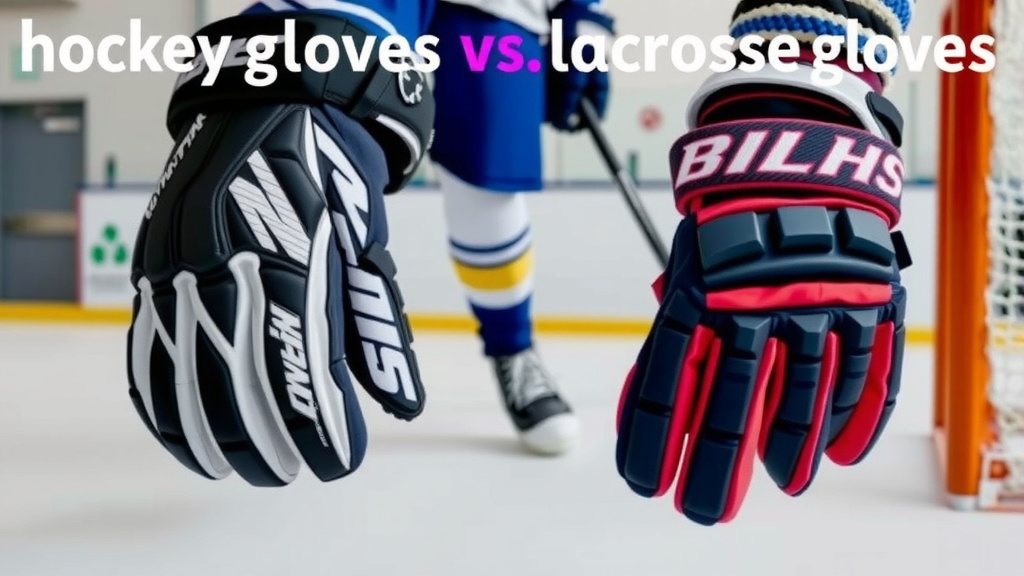
Direct Comparison: Hockey vs. Lacrosse Gloves
To help visualize the differences, let’s put them side-by-side. It becomes clear why one isn’t a good substitute for the other.
| Feature | Hockey Gloves | Lacrosse Gloves |
|---|---|---|
| Primary Goal | Impact Protection | Stick Control & Dexterity |
| Padding | Thick, heavy-duty, robust | Lighter, flexible, strategic |
| Flexibility | Lower | Higher |
| Weight | Heavier | Lighter |
| Feel on Stick | Less tactile | More tactile |
| Typical Use Case | High-impact collisions, puck impacts | Fast stick work, shooting, passing |
What About Stick Handling?
The difference in stick handling is profound. With hockey gloves, the bulk can make it feel like you’re holding a thicker stick. You might not have the same level of finger articulation. Lacrosse gloves, on the other hand, allow you to feel every nuance of the stick. This precision is vital for catching passes, cradling the ball, and making accurate shots.
Impact Absorption Differences
When a slap shot hits you, you want serious padding. Hockey gloves provide this. They are designed to spread the force of impact over a larger area of your hand and wrist. Lacrosse gloves offer some protection, but they aren’t designed to take the kind of direct, high-velocity impact common in hockey.
Choosing the Right Gloves for Your Sport
So, how do you know which pair is right for you? It really boils down to the sport you play. Trying to use one type of glove for the other sport is like trying to swim in hiking boots – it’s just not built for the task!
When to Choose Hockey Gloves
If you’re playing hockey, hockey gloves are your only sensible choice. The level of protection is essential for your safety. We found that serious hockey players understand that investing in good hockey gloves is an investment in their physical well-being on the ice.
When to Choose Lacrosse Gloves
For lacrosse players, lacrosse gloves are the way to go. They allow you to develop and use your stick skills to their fullest potential. The flexibility and control they offer are paramount to success in the game. You’ll be able to make those quick dodges and pinpoint passes that win games.
A Quick Checklist for Your Decision:
- Are you playing hockey? If yes, choose hockey gloves.
- Is maximum hand protection against hard impacts your priority? Hockey gloves.
- Do you need to feel the stick precisely for fast passing and shooting? Lacrosse gloves.
- Is flexibility and range of motion in your fingers key for your sport? Lacrosse gloves.
- Are you primarily concerned with absorbing heavy slashes and puck impacts? Hockey gloves.
- Do you want a glove that feels like a second skin for optimal control? Lacrosse gloves.
Conclusion
You’ve learned that hockey gloves and lacrosse gloves are designed for completely different jobs. Hockey gloves prioritize heavy-duty impact protection, making them bulkier. Lacrosse gloves focus on flexibility and stick feel, keeping them lightweight. Swapping them means sacrificing either safety or performance. For the best experience and to protect your hands, always choose the gloves made for the sport you’re playing. Your next step is to try on gloves specific to your sport and feel the difference for yourself!
Frequently Asked Questions
Can I use my old lacrosse gloves for hockey practice?
It’s not recommended. Lacrosse gloves lack the robust padding needed to absorb the hard impacts common in hockey, like blocked shots or stick checks. You risk serious hand injuries without proper protection.
Will hockey gloves make my hands too stiff for lacrosse?
Yes, likely. The thick padding and rigid construction of hockey gloves significantly limit finger and wrist flexibility. This will hinder your ability to control a lacrosse stick, catch passes, and shoot accurately.
Are lacrosse gloves safe enough for casual pond hockey?
For very casual play with minimal checking, they might offer some protection. However, even casual hockey involves more stick impacts than lacrosse. Hockey gloves offer superior safety if there’s any risk of pucks or sticks hitting your hands forcefully.
What makes lacrosse gloves feel like a “second skin”?
Lacrosse gloves use thinner padding, often just on the palm and fingers, and highly flexible materials. This design allows your fingers to move freely and maintain a direct feel for the stick, almost as if you weren’t wearing gloves at all.
If I play both sports, do I really need two different pairs of gloves?
Yes, for optimal safety and performance, you absolutely do. Using hockey gloves for lacrosse compromises your stick skills, while using lacrosse gloves for hockey puts your hands at significant risk of injury from impacts.