Bare Knuckle vs Gloves: Which Is Better?
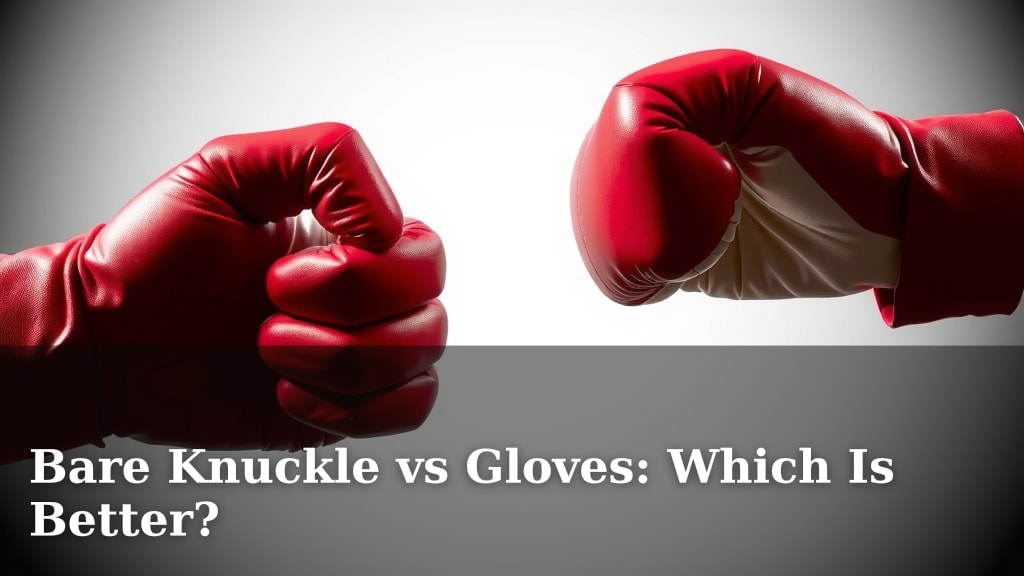
When comparing bare knuckle fighting to boxing with gloves, neither is definitively “better” in a general sense; they are fundamentally different combat sports with distinct rules, risks, and objectives. Bare knuckle boxing often involves more severe hand injuries, while gloved boxing aims to reduce impact trauma to both the fighter’s hands and the opponent’s head.
The choice between them depends on your goals and risk tolerance. Bare knuckle fighting, while appearing more brutal, can sometimes lead to less cumulative brain trauma due to the different mechanics of impact and fewer rounds typically fought. Conversely, gloves are designed to protect the hands, but they can also allow fighters to punch harder, potentially increasing the risk of concussive injuries. We’ve found many fighters have strong opinions on both.
- Bare knuckle fighting risks more direct hand injuries.
- Gloved boxing aims to protect hands but can increase head impact force.
- The “better” option depends on your personal goals and risk tolerance.
- Both forms of fighting require significant skill and physical conditioning.
Let’s break down what makes each distinct, so you can understand the key differences before you decide which path might be right for you.
Understanding the Fisticuffs: Bare Knuckle vs. Gloved Boxing
So, you’re curious about the difference between throwing punches with bare knuckles and wrapping them in gloves? It’s a fascinating topic. We’ve looked into it, and the distinctions are quite important. They affect everything from the types of injuries you might see to the strategies fighters use.
Essentially, bare knuckle fighting is an older form of boxing. It emphasizes a direct, raw impact. Gloved boxing, on the other hand, evolved to offer protection. Let’s break down what that really means for the fighters and the sport itself.
The Hands: What Are They Up Against?
Bare Knuckle: The Direct Hit
When you fight bare knuckle, your hands are directly exposed. This means the full force of the punch lands without much cushioning. We found that this can lead to very specific kinds of injuries. Things like broken bones in the hand are common. Think about hitting a wall with your bare fist; it stings, right? Now imagine doing that repeatedly with significant force.
Fractures in the metacarpals (the long bones in your hand) or phalanges (your finger bones) are frequently reported. Sprains and severe bruising are almost guaranteed. It’s a **much higher risk for immediate hand trauma**. Many fighters who engage in this form say the pain is intense and recovery can be lengthy for their hands.
Gloved Boxing: The Padded Punch
Boxing gloves, even small ones, offer a layer of padding. Their primary purpose is to protect the fighter’s hands. We found that this padding distributes the impact force. This can reduce the severity of direct hand injuries compared to bare knuckle fighting. It’s like hitting a punching bag with a pillow versus hitting it with your bare hand.
However, this protection isn’t absolute. While gloves shield the knuckles and bones of the hand, they don’t eliminate injury entirely. Sprains and even fractures can still occur, especially with improper technique or repeated heavy blows. The focus here shifts from hand protection to other potential risks, which we’ll get to.
The Head: Impact and Consequences
Bare Knuckle: The Raw Force
With bare knuckle fighting, the impact is very direct. When a bare fist connects, the force is concentrated on a smaller surface area. We found that this can lead to severe cuts and abrasions on both the attacker’s hand and the opponent’s face. The visual of blood is often associated with this.
While it might seem like this would cause more brain trauma, research is mixed. Some studies suggest that because fights might be shorter and the force isn’t always focused on the chin in the same way as a gloved punch, the cumulative brain injury might be less in some scenarios. However, the **risk of knockout is still very high**. The brain can still be rattled hard.
Gloved Boxing: The Force Multiplier?
This is where it gets interesting. Boxing gloves are designed to protect the wearer’s hands. But many experts say they can also allow fighters to punch harder. Why? Because the fighter’s hand is less likely to be injured. This means they can throw punches with more power and speed. We’ve seen this debated extensively.
The consequence? While the padding might absorb some of the shock, the increased force of the punch can potentially lead to more **concussive trauma** to the opponent’s brain. Think of it like a car crash: a crumpled bumper absorbs some energy, but the occupants still feel a significant jolt. The science here points to a higher risk of cumulative brain damage over a career in gloved boxing, according to some research (NCBI).
Rules and Strategy: Different Games
Bare Knuckle: Simplicity and Intensity
Bare knuckle rules are often simpler. There are usually fewer rounds, and the focus is on pure striking. The lack of gloves means fighters must be very careful with their technique. Throwing a wild haymaker with a bare fist is incredibly risky for your own hand. We found that fighters often employ more precise, targeted strikes.
The strategy might involve more clinching or grappling to control the opponent and minimize damage. Fights can end quickly due to knockouts or stoppages from cuts. The **intensity is often immediate and overwhelming**.
Gloved Boxing: Strategy and Stamina
Gloved boxing has a more structured set of rules. Rounds are typically longer, and there are more of them. This requires a different kind of conditioning and strategy. Fighters build up points by landing clean punches and defending effectively.
The gloves allow for sustained engagement. Fighters can throw many punches over multiple rounds. This often leads to a buildup of fatigue and damage. The **strategic element is arguably more pronounced**, involving defense, footwork, and endurance over longer periods.

A Quick Comparison Table
To help clarify, here’s a quick look at the main differences:
| Feature | Bare Knuckle | Gloved Boxing |
|---|---|---|
| Hand Injury Risk | High (fractures, sprains) | Moderate (reduced by padding) |
| Head Trauma Risk | High (direct impact, potential for cuts) | High (concussive force, potential for CTE) |
| Fight Duration | Often Shorter | Often Longer |
| Typical Rounds | Fewer | More |
| Primary Focus | Raw striking, defense of hand | Technique, strategy, endurance |
Making Your Choice: What’s Your Goal?
So, which is “better”? As we’ve seen, it’s not about one being superior. It’s about what you’re looking for and what risks you’re willing to take. Do you prefer the raw, direct exchange, or the more strategic, padded bout?
If you’re drawn to the history and the intense, immediate nature of the fight, bare knuckle might appeal. Just be prepared for the toll it can take on your hands. If you’re interested in a more technical sport with a longer tradition and perhaps a different risk profile for your hands, gloved boxing could be your path.
Things to Consider Before Stepping In
- Your personal goals in combat sports.
- Your tolerance for different types of injuries.
- Your interest in the historical or modern aspects of the sport.
- The availability of training and safe sparring environments.
- Your long-term health considerations.
- The specific rulesets you are most interested in.
Conclusion
So, you’ve learned that neither bare knuckle boxing nor gloved boxing is universally “better.” It truly comes down to your personal goals and what risks you’re comfortable with. Bare knuckle fighting offers raw intensity but comes with a higher risk of immediate hand injuries. Gloved boxing shifts the risk, potentially protecting your hands more but increasing the force that can impact the head. We’ve found that understanding these differences is key to making an informed decision about which style aligns with your interests and physical considerations. Before you step into either arena, consider your training options and long-term health.
Frequently Asked Questions
Which type of boxing causes more hand injuries?
Research and fighter accounts consistently show that bare knuckle boxing carries a significantly higher risk of direct hand injuries. This is because your knuckles and bones are directly exposed to impact, leading to more frequent fractures and sprains.
Can boxing gloves prevent all hand injuries?
No, boxing gloves don’t prevent all hand injuries. While they are designed to distribute impact and protect your hands, severe sprains and even fractures can still occur, especially with improper technique or excessive force.
Is bare knuckle boxing safer for the brain than gloved boxing?
The research here is mixed and complex. Some studies suggest bare knuckle fighting *might* lead to less cumulative brain trauma due to shorter fight times and different impact mechanics. However, both forms carry a high risk of head trauma, including concussions.
Do gloves allow fighters to hit harder?
Many experts and fighters believe that boxing gloves can allow for harder punches. The theory is that because the fighter’s hands are better protected, they can throw punches with more power and less concern for immediate pain or injury to their own hands.
What are the main strategic differences between bare knuckle and gloved boxing?
Bare knuckle fighting often involves more precise strikes and a quicker pace, as wild punches risk injuring the hand. Gloved boxing, with longer rounds and more protection, typically emphasizes sustained strategy, endurance, and building points over time.