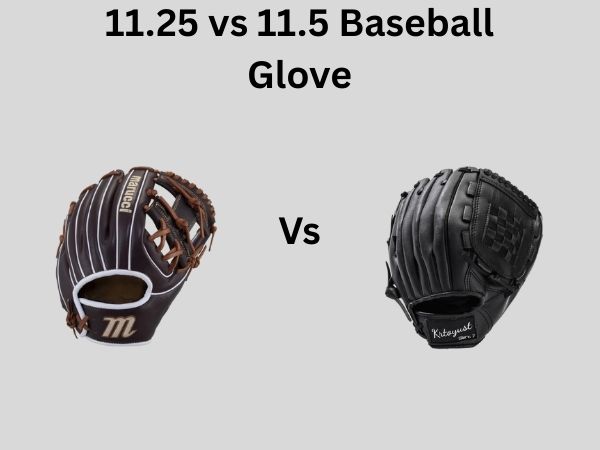
11.25 vs 11.5 Baseball Glove: Which Size Is Better for Your Game?
When you’re standing in the equipment aisle at your local sporting goods store, staring at row after row of baseball gloves, one question inevitably pops into your head: what’s the real difference between an 11.25 and an 11.5 baseball glove? It might seem like splitting hairs—after all, we’re only talking about a quarter inch. But trust me, that seemingly tiny difference can have a surprising impact on your performance, comfort, and overall playing experience.
I’ve spent years working with players of all skill levels, and I can tell you that glove size is one of those decisions that deserves more thought than most people give it. Let’s dive deep into this comparison and help you figure out which size is actually better for you.
Understanding Baseball Glove Sizing
Before we can really compare these two sizes, we need to understand how baseball glove sizing actually works. Glove sizes are measured in inches, starting from the tip of the thumb to the tip of the pinky finger when the glove is fully extended and laid flat. Think of it like measuring your own hand—it’s a straightforward linear measurement that tells you the overall span of the glove.
The sizing system ranges from small gloves around 10.75 inches all the way up to massive 13-inch mitts used by catchers and first basemen. The 11.25 and 11.5 sizes sit right in that sweet spot for many infielders and some outfielders, which is why you’ll see so many players gravitating toward these options.
How Measurements Work
The measurement process is consistent across manufacturers, but here’s where it gets interesting: different brands might have slightly different feels even when they’re technically the same size. One manufacturer’s 11.5 might feel a touch different from another’s, thanks to variations in padding, finger width, and overall pocket design.
The 11.25 Baseball Glove: A Closer Look
The 11.25 glove sits on the smaller end of our comparison. This size has become incredibly popular in recent years, particularly among infielders who want something that doesn’t feel too bulky but still provides enough real estate to secure the ball.
Who Should Consider an 11.25?
If you’re a shortstop or second baseman with average to smaller hands, an 11.25 glove might be your perfect match. The compact nature of this size makes it ideal for:
- Quick transfers from glove to hand
- Rapid throwing mechanics
- Playing positions that demand nimbleness and speed
- Players with smaller hand frames
- Youth and high school players still developing their skills
The beauty of an 11.25 is that it feels almost like an extension of your hand. There’s minimal lag between catching the ball and getting it out of the glove for a throw. When you’re turning a double play at second base and you’ve got maybe a second and a half to make things happen, that quick access matters.
Advantages of the 11.25 Size
Let me break down the real advantages you get when you go with an 11.25:
Speed and Agility: Your hand doesn’t have to travel as far inside the glove to secure the ball. This translates directly into faster throws and better response times. In competitive baseball, that quarter-second advantage can be the difference between an out and an error.
Control and Handling: A smaller glove is lighter and easier to maneuver. You can position it more precisely, and you have better tactile feedback about where the ball is sitting in the pocket.
Comfort Factor: Many players find that a more compact glove causes less arm fatigue during extended practice sessions or games. Your arm doesn’t have to support as much weight out in front of your body.
Potential Drawbacks of the 11.25
However, every advantage comes with a trade-off. The 11.25 isn’t perfect for everyone:
- Less margin for error when catching
- Smaller pocket means less ball security on difficult plays
- Players with larger hands might feel cramped
- Less intimidating presence in the field
- Reduced sweet spot for catching accuracy
Think of it this way: a smaller glove is like a smaller target. When you’re precision throwing and your mechanics are tight, it’s fantastic. But if you’re having an off day with your catching, you might wish for a bigger net to help save you.
The 11.5 Baseball Glove: Comprehensive Overview
Now let’s shift our focus to the 11.5, which represents a middle ground that appeals to a much broader range of players. This size has become something of a standard in youth and amateur baseball.
Who Benefits Most from an 11.5?
An 11.5 glove works wonderfully for:
- Middle infielders transitioning from youth to competitive play
- Players with medium-sized hands
- Those who want versatility across different positions
- Athletes seeking a balance between control and forgiveness
- Players moving up in competitive levels
The 11.5 has emerged as the go-to size for coaches recommending gloves to younger players who are still figuring out their position assignments. It’s flexible enough to work at several infield positions and responsive enough for serious ballplayers.
Key Advantages of the 11.5 Size
Sweet Spot Balance: You get a meaningful increase in catching surface compared to the 11.25, but you haven’t gone so large that you sacrifice responsiveness. The pocket is forgiving without being unwieldy.
Versatility: An 11.5 works across multiple positions. You could play shortstop one day and move to third base the next without feeling like your glove is suddenly wrong for the position.
Growing Room: For younger players especially, an 11.5 has enough surface area to last through a few seasons as hands continue to develop and grow. You’re not buying a new glove every year.
Confidence Building: There’s something psychologically reassuring about a slightly larger catching surface. Players tend to feel more confident making plays because they know they have a bit more margin for error.
Limitations of the 11.5
The 11.5 isn’t universally perfect either. Here are the trade-offs:
It’s marginally heavier than an 11.25, which might matter during long tournaments in hot weather. Some players with smaller hands report that it takes slightly longer to locate the ball in the pocket for quick throws. And if you’re someone who absolutely needs maximum speed and agility—like a professional shortstop—you might find the extra quarter inch unnecessary.
Comparing Performance Metrics: 11.25 vs 11.5
Let’s get specific about how these gloves actually perform in game situations. I want to move beyond the theoretical and talk about what you’ll actually experience on the field.
Throwing Speed and Accuracy
When we’re talking about transferring the ball from glove to hand, an 11.25 has a measurable advantage. Studies of infielders show that the smaller glove typically shaves milliseconds off transfer time. But here’s the thing—that advantage only matters if you have good fundamentals. A player with proper technique will make the most of both sizes.
Accuracy-wise, both sizes perform similarly when you’re properly trained. The real difference isn’t the glove size; it’s your preparation and mechanics.
Catching Consistency
The 11.5 glove objectively gives you more forgiving catches. When a ball comes in slightly off-center or with unexpected spin, that extra quarter inch of coverage can keep the ball from bouncing out. In competitive play, consistency matters more than speed sometimes.
Comfort During Extended Play
Both sizes are comfortable for most players, but the choice really depends on your hand size and arm strength. Smaller-framed players might find the 11.25 more comfortable because it doesn’t feel like they’re holding a dinner plate on their hand all day. Larger players generally prefer the 11.5 because it feels more proportional to their frame.
Hand Size Considerations
This is where the rubber really meets the road. Your hand size matters more than your position when deciding between these two gloves.
Small Hands and the Sizing Question
If you’re a teenager with smaller hands or an adult with below-average hand size, the 11.25 is probably your better choice. You’ll have easier control, less awkwardness reaching into the pocket, and better overall handling.
Average Hands: The Sweet Spot
Most players fall into this category, and honestly, you could go either way. Some prefer the nimbleness of an 11.25, while others appreciate the forgiving nature of an 11.5. The best approach is to try both if possible before committing to a purchase.
Larger Hands and Glove Fit
Players with larger hands should probably lean toward the 11.5, and honestly, might even consider an 11.75. An 11.25 might feel cramped, leading to slower transfers and reduced catching comfort. Your hand size relative to glove size has a direct impact on how efficiently you can use the glove.
Position-Specific Recommendations
Different positions have different demands, and that should influence your sizing decision.
Shortstops and Second Basemen
These middle infielders benefit from smaller, quicker gloves. An 11.25 is traditionally the choice here, though many modern players successfully use 11.5 gloves. The key factor is how quickly you need to make plays—if you’re in a competitive league with fast-paced action, the 11.25 edge might matter.
Third Basemen
Third base is interesting because you have slightly more time to make plays compared to shortstop. An 11.5 works beautifully here, giving you a bigger target for catching hard-hit balls while still being responsive enough for throws.
Outfielders (Left Field and Center Field)
If you’re an outfielder, you’re probably looking at larger glove sizes anyway. But among those who wear smaller gloves, an 11.5 is generally preferred because outfielders value that extra catching surface for line drives and fly balls.
The Break-In Period Factor
Here’s something people don’t talk about enough: how these two sizes break in differently.
An 11.25 glove typically breaks in faster because there’s less material overall. You might be game-ready within 20-30 hours of use. The 11.5, with its slightly larger structure, might take another 10-15 hours to fully conform to your hand and hitting style.
However, the 11.5 often maintains its shape better over time. The extra material provides more structural integrity, meaning your glove will stay in good condition longer.
Price Considerations
In general, the price difference between an 11.25 and 11.5 is minimal. You might see a five to ten dollar difference depending on the brand and quality level. This means price shouldn’t be your deciding factor.
What matters more is whether you’re buying a glove that will serve you well and last through multiple seasons. An 11.5 might have a slight edge here because of the durability factor, but a quality 11.25 from a reputable brand will also last years with proper care.
Brand-Specific Variations
I should mention that Rawlings, Wilson, Spalding, and other major manufacturers all size their gloves slightly differently. An 11.5 from Wilson might have a different feel than an 11.5 from Spalding. The pocket depth, finger width, and overall construction vary.
This is why trying on gloves before buying, if possible, is so valuable. A few minutes testing different brands and sizes beats reading reviews all day long.
Transition and Changing Glove Sizes
If you’re currently using an 11.25 and thinking about moving to an 11.5, or vice versa, expect a brief adjustment period. Your brain has developed muscle memory for the 11.25 glove’s size and feel. Switching to 11.5 might feel slightly awkward for a practice or two.
The good news? Most players adapt within just a few hours of use. Baseball players are generally quick to adjust to equipment changes.
Professional and Amateur Standards
Professional baseball has players using both sizes. You’ll see major league shortstops using 11.25 gloves and others using 11.5. There’s no single standard; it’s entirely individual preference.
In youth baseball, coaches often recommend 11.5 because it’s more forgiving and gives younger players more confidence. As players develop and their mechanics improve, some transition to smaller gloves for the speed advantage.
Making Your Final Decision
So how do you actually choose between these two? Here’s my straightforward approach:
First, measure your hand. From the tip of your middle finger to your wrist crease should be roughly proportional to your glove size. If your hand measures around 7 inches, you’re probably in the 11.25-11.5 range.
Second, consider your position and playing style. Do you prioritize speed and quick transfers, or do you value that extra catching surface?
Third, try both if you can. Five minutes wearing each glove will tell you more than any article can.
Fourth, think about your competitive level. Beginners and younger players typically benefit from the 11.5. Serious competitive players might prefer the 11.25.
Conclusion
The choice between an 11.25 and 11.5 baseball glove ultimately comes down to your specific needs, hand size, and playing style. Neither is objectively “better”—they’re just better suited to different players.
The 11.25 excels for players who need speed and quick transfers, particularly middle infielders with smaller hands. It’s lighter, more responsive, and feels more like a natural extension of your hand. If you’re prioritizing agility and rapid gameplay, this size delivers.
The 11.5 offers versatility, forgivingness, and longevity. It works across multiple positions, provides a more forgiving catching surface, and appeals to players with average to larger hands. If you want a glove that performs consistently across various game situations, this size is your answer.
Take time to consider the factors we’ve discussed—your hand size, position, skill level, and personal preference for speed versus control. Try both sizes if possible. Remember that either choice will serve you well in competitive play if you’ve selected the right one for your unique situation. The real difference will be made by your training, technique, and dedication to the game.
Frequently Asked Questions
Can I use an 11.25 glove if I have larger hands?
Technically yes, but it’s not ideal. While larger hands can fit into an 11.25 glove, you might experience slower transfer times and less comfortable handling. Most players with above-average hand size find that an 11.