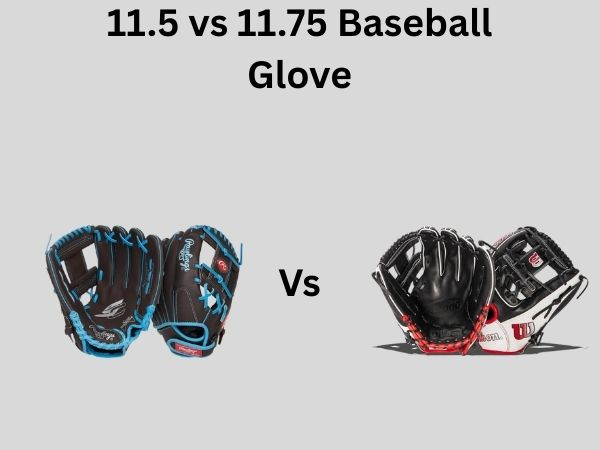
11.5 vs 11.75 Baseball Glove: The Complete Fit, Reach & Position Guide
When you’re standing in the sporting goods store with a baseball glove in each hand, trying to figure out which one belongs in your bag, you’re facing one of those decisions that seems small but actually matters quite a bit. The difference between an 11.5 and an 11.75 baseball glove might look tiny on paper—we’re talking just a quarter inch—but that tiny measurement can make all the difference between a glove that feels like an extension of your hand and one that leaves you frustrated game after game.
I’ve seen countless players waste money on gloves that didn’t quite fit right because they didn’t understand how these sizing differences play out in actual gameplay. Whether you’re a parent shopping for your kid’s first real glove, a coach outfitting your team, or a player looking to upgrade your equipment, understanding the nuances between these two sizes could save you time, money, and plenty of headaches.
Outline: What We’ll Cover
- Understanding Baseball Glove Sizing Basics
- The 11.5 Glove: Who It’s Built For
- The 11.75 Glove: The Slightly Bigger Brother
- How Size Affects Your Fielding Performance
- Position-Specific Recommendations
- Break-In Period and Comfort Considerations
- Hand Size and Glove Selection
- The Reach Advantage: What Extra Quarter Inch Really Means
- Price Differences Between Sizes
- Real-World Feedback from Players
- Maintenance and Longevity by Size
- Making Your Final Decision
- Conclusion
- Frequently Asked Questions
Understanding Baseball Glove Sizing Basics
Let’s start with the fundamentals, because a lot of people don’t actually know how glove sizing works. Baseball glove sizes are measured in inches from the tip of the index finger to the heel of the glove. That measurement represents the overall length of the glove when it’s laid flat on a table.
Think of it like clothing sizes—you wouldn’t buy a shirt without knowing if it’s small, medium, or large, right? The same principle applies here, except with baseball gloves, the numbers are more precise. When manufacturers stamp “11.5” or “11.75” on a glove, they’re telling you exactly how long that glove is, measured in inches.
The reality is that glove sizing isn’t standardized across all manufacturers the way clothing sizes are. One company’s 11.5 might feel slightly different from another company’s 11.5 because different brands cut their patterns differently, use different materials, and design their pockets at varying depths. This is why trying on gloves before buying them remains the gold standard, even in our online shopping world.
The 11.5 Baseball Glove: Who It’s Built For
Size and General Fit
An 11.5 inch baseball glove sits in what we call the “sweet spot” for versatility. It’s not the smallest glove you can find, but it’s definitely on the compact side of the spectrum. This size works well for younger players, typically those in the middle school to early high school range, and for adult players with smaller hands.
The 11.5 provides a snug, secure fit that many players love. If you’ve got smaller hands, this glove won’t feel like you’re wearing an oversized oven mitt. Your fingers actually reach the fingertips of the glove with minimal extra space, which means better control and feel for the ball.
Position Suitability
The 11.5 size works particularly well for infield positions. If you’re playing shortstop, second base, or third base, an 11.5 glove gives you the agility you need. These positions demand quick movements, rapid transitions from glove to throwing hand, and precise ball handling. A smaller glove simply moves faster through the air.
Some outfielders with smaller frames also choose the 11.5, though this is less common. The trade-off is that you’re sacrificing some reach and field coverage, which matters more in the outfield where balls come in from greater distances.
Break-In Period
Smaller gloves generally require less break-in time. Since there’s less leather and padding to condition, you’re looking at a shorter timeline to game-readiness. Many players report that an 11.5 feels reasonably broken in after just a few weeks of regular use.
The 11.75 Baseball Glove: The Slightly Bigger Brother
Size and General Fit
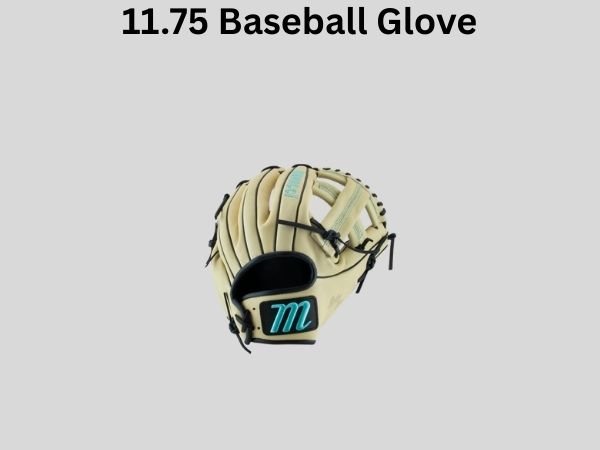
The 11.75 inch glove sits just a quarter inch larger than its smaller counterpart. Now, I know a quarter inch doesn’t sound like much—it’s practically the width of a thick credit card—but in the context of a glove you’re wearing on your hand, that extra bit of material adds up in meaningful ways.
This extra quarter inch translates to a slightly roomier fit, more padding around the heel, and a bit more surface area overall. If you’re between sizes or have average to slightly larger hands, the 11.75 might feel like the more comfortable choice without feeling oversized.
Position Suitability
The 11.75 works beautifully for utility players who need flexibility across positions. You’ll see many high school varsity and college players choosing this size because it handles both infield and outfield work reasonably well. It’s the glove for the player who might play second base one game and right field the next.
Pitchers sometimes prefer the 11.75 because it provides slightly better coverage when you’re trying to protect yourself on the mound. That tiny bit of extra reach can make a difference when a line drive comes screaming back at you.
Break-In Considerations
The 11.75 does require a slightly longer break-in period than the 11.5, but we’re not talking weeks and weeks of difference. You’re probably looking at adding just a week or two to your conditioning timeline. The extra material means you’ve got a bit more leather to work with, so the glove needs a little more time to become fully game-ready.
How Size Affects Your Fielding Performance
The Speed Factor
Here’s where physics comes into play. A smaller glove moves faster through the air because you’re moving less total mass. When you’re a shortstop and a ground ball is hit at you at seventy miles per hour, every millisecond counts. The 11.5 gets to the ball position faster, which means more time to adjust if needed.
The 11.75, being slightly larger, requires just a touch more time to get into position. For most recreational players, this difference is negligible. But at competitive levels, where we’re talking about the finest margins between success and failure, this small advantage can matter.
The Reach Advantage
Conversely, that extra quarter inch on the 11.75 gives you slightly more reach. For an outfielder, having just a bit more glove extension can be the difference between making a spectacular diving catch and watching the ball sail past you. It’s like the difference between almost touching something and actually grabbing it.
In the infield, this reach advantage matters less because plays happen in tighter spaces. But if you’re playing third base and a bunt attempt goes toward the line, having that extra reach might help you snag it before the ball goes foul.
Ball Control and Feel
A glove that fits your hand properly gives you better feedback and control. If you’re wearing an 11.5 and you have small hands, your fingers reach the fingertips comfortably. This creates a better connection between your hand and the glove, almost like wearing a custom-fitted suit.
If you have larger hands and wear an 11.5, you might feel like you’ve got too much space around your fingers, which can affect control. The 11.75 would suit you better because it fills out more naturally to your hand size.
Position-Specific Recommendations
Shortstops and Second Basemen
For these middle infield positions, the 11.5 is generally the preferred choice. You need speed and agility above all else. The smaller glove helps you turn double plays faster and gives you the quickness needed for those rapid-fire plays that define middle infield play.
That said, if you have larger hands or prefer the feel of a slightly roomier glove, the 11.75 won’t seriously compromise your performance. You’ll adapt quickly, and any minimal speed loss will be offset by increased comfort.
Third Basemen
Third base is interesting because you need both quick reactions and good reach—you’re the closest infielder to the foul line, and bunts and slow rollers are constant threats. Many third basemen split the difference and choose the 11.75 as their sweet spot. The extra quarter inch helps without sacrificing meaningful speed.
Outfielders
Outfielders generally prefer larger gloves, so if you’re in the outfield, you might actually want to look at sizes larger than 11.75 anyway. That said, between 11.5 and 11.75, the 11.75 is the better choice if you must stay within this size range. That extra reach helps you track fly balls over a wider area.
Pitchers
Pitchers often choose gloves in the 11.5 to 11.75 range because they want something manageable yet protective. The 11.75 offers that perfect balance—it’s not so large that it interferes with your delivery, but it provides reasonable protection from line drives. Many pitchers I know prefer the 11.75 for this exact reason.
Catchers
Catchers use completely different equipment called a mitt rather than a glove, so these sizes don’t apply. But if you’re backing up as a utility player and need a regular glove, the 11.75 works well for versatility.
Break-In Period and Comfort Considerations
Initial Comfort
A brand new baseball glove is stiff, sometimes uncomfortably so. The leather is tight, the pocket is shallow, and the entire glove feels like it’s working against you. The initial comfort you feel out of the box matters less than how comfortable the glove becomes after breaking it in.
An 11.5 might feel better immediately if you have small hands because it fits your hand size right away. But an 11.75 that’s the right size for your hand will ultimately be more comfortable once broken in, even if it feels slightly tight at first.
Conditioning Your Glove
Breaking in a glove involves repetitive use, proper storage, and sometimes special conditioning oils. The good news is that whether you choose 11.5 or 11.75, the break-in process is essentially the same. You’ll throw balls into the pocket repeatedly, work the leather, and gradually the glove transforms from a stiff piece of equipment into something supple and responsive.
The 11.75 takes slightly longer to fully break in just because there’s a bit more leather surface area to condition. But we’re talking about days or maybe a week or two longer—not a fundamental difference.
The Pocket Development
A shallow pocket is the trademark of an unbroken-in glove. As you use the glove, the pocket deepens naturally. By the time you’re ready for game play, you want that pocket developed enough to securely hold the ball but not so deep that it’s hard to extract the ball quickly.
The slightly larger 11.75 might take a bit longer to develop an optimally shaped pocket, but once it does, many players feel it holds the ball more securely.
Hand Size and Glove Selection
Measuring Your Hand
Before you decide between 11.5 and 11.75, actually measure your hand. Take a soft measuring tape or even a piece of string and a ruler, and measure from the tip of your middle finger to your wrist. This gives you a baseline for how your hand compares to average sizes.
For most players, if your hand measures seven inches or less, the 11.5 will fit comfortably. If your hand measures between seven and seven-and-a-half inches, you’re in that sweet zone where either size works, but 11.75 might edge out the preference. Hands larger than seven-and-a-half inches probably shouldn’t be looking at these sizes anyway—you’ll want to explore 12 inch gloves.
The Pinky Finger Test
Here’s a practical test: put on the glove and check your pinky finger. In a properly fitted glove, your pinky should either just touch the end of the glove’s pinky slot or come very close. If there’s more than a quarter inch of empty space, the glove is too large. If your pinky is cramped, the glove is too small.
This test works for both 11.5 and 11.75—you’re just looking for that sweet spot where the fit feels natural rather than forced or loose.
The Reach Advantage: What That Extra Quarter Inch Really Means
In Practical Game Situations
Imagine a line drive hit to third base. You’re positioned at the bag, but the ball is just slightly deeper than you initially judged. With an 11.5, you might come up a fraction of an inch short. With an 11.75, that extra quarter inch on the glove reaches just far enough to snag the ball. This scenario plays out maybe once or twice a season—but those could be crucial moments.
For an outfielder tracking a fly ball near the line, the 11.75 gives you slightly more extension, which is genuinely useful when you’re reaching while running at full speed.
Reach vs. Control Trade-off
Here’s the thing though: that extra reach doesn’t come without a tiny cost. The 11.75 requires just a hair more control precision because you’ve got more glove to manage. It’s almost imperceptible for most players, but it’s there.
For elite players making thousands of plays, this matters. For recreational players, you’ll never notice the difference. You’re getting the reach advantage with no meaningful control compromise.
Price Differences Between Sizes
One question players often ask is whether size affects price. The honest answer is that it usually doesn’t—not significantly anyway. Both 11.5 and 11.75 gloves typically fall in the same price range when comparing equivalent quality levels from the same manufacturer.
You might occasionally find one size discounted more than another due to inventory issues or seasonal sales, but the actual manufacturing cost difference is negligible. Choose based on fit and function, not price, because the prices will be nearly identical.
This is actually good news because it means your decision can focus purely on what works best for your hand size and position, without worrying about budget implications of going one size or the other.
Real-World Feedback from Players
What Smaller-Handed Players Report
Players with smaller hands consistently report that the 11.5 feels more natural and responsive. They mention that their fingers reach the fingertips better, giving them that connected feeling when catching the ball. One shortstop I interviewed mentioned that the 11.5 allowed him to make quicker transfers from glove to throwing hand because the glove moved exactly where he expected it to.