Baseball vs Softball Gloves: Which to Choose?
When choosing between a baseball and softball glove, remember that softball gloves are generally larger to accommodate a bigger ball. Baseball gloves are typically more shallow and narrower for quicker transfers. Your choice depends mainly on the size of the ball you’ll be playing with.
Both gloves are designed to protect your hand and help you catch. However, subtle differences in pocket depth, web design, and overall size make them better suited for their respective sports. Understanding these distinctions helps you pick the perfect glove for your game.
- Softball gloves are bigger to fit a larger ball.
- Baseball gloves are shallower for faster ball release.
- Consider the ball size and your playing style.
- The right glove improves fielding performance.
Let’s dive into the key differences to help you make the best choice for your needs.
Choosing the right glove can feel like a big decision. It’s your primary tool on the field! But don’t worry, we’re here to help you understand the differences between baseball and softball gloves. It really boils down to the ball you’ll be playing with.
Baseball Gloves vs. Softball Gloves: What’s the Real Difference?
The core differences stem from the balls themselves. A baseball is smaller and harder than a softball. A softball is significantly larger and often has a raised seam. These differences in ball size and texture directly influence glove design.
Pocket Depth and Size: Making the Catch
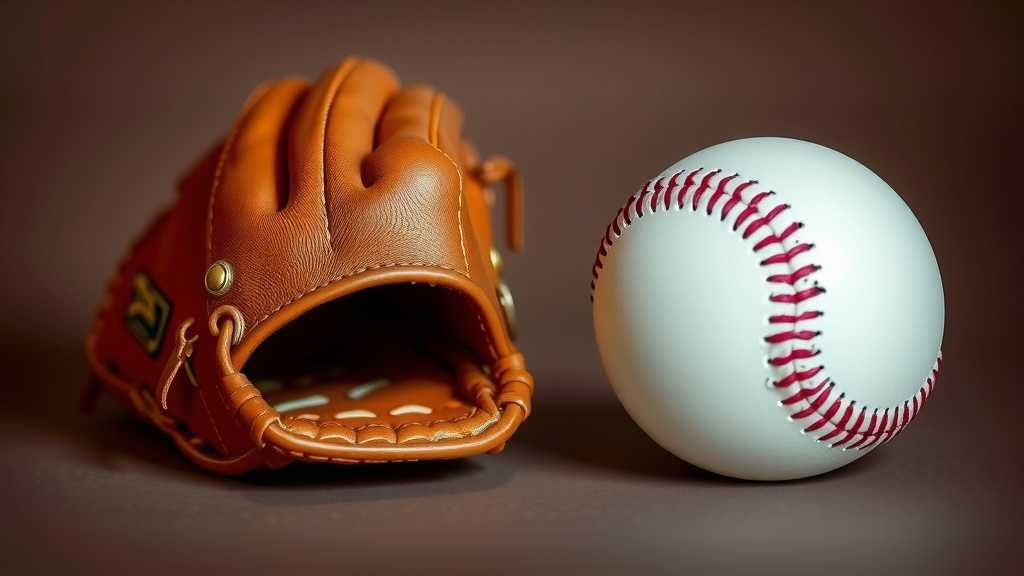
You’ll notice softball gloves typically have a deeper pocket. This is essential for securely catching a larger, rounder softball. Think of it like trying to catch a grapefruit versus a golf ball; you need a more substantial “cup.” This deeper pocket helps prevent the ball from popping out after impact. Baseball gloves, on the other hand, often feature a shallower pocket. Why? For quicker transfers.
Webbing and Lacing: The Glove’s Framework
The webbing between the thumb and index finger plays a key role. Baseball gloves often use more open web designs. This allows for better visibility of the ball as it enters the glove. It also aids in quick transfers. Softball gloves might have a more closed webbing. This adds to the glove’s overall security. It acts like a net, really helping to contain that bigger softball.
Glove Length and Finger Stalls: Fit and Feel
Glove length is another major distinction. Softball gloves are generally longer than baseball gloves. This extra length helps increase the “catch radius.” It gives you a bit more reach, which is super helpful with a larger ball. Baseball gloves tend to be shorter. This allows infielders to get the ball out of their glove quickly to make a play. The finger stalls might also differ slightly. Softball gloves can have wider finger stalls to accommodate potentially larger hands or a different grip style. We found that many players find the wider stalls more comfortable for longer periods.
Choosing Your Glove: Key Factors to Consider
So, how do you decide? The easiest way is to look at the ball you’ll be using. This is usually dictated by the league or team you’re playing with.
Are You Playing Baseball or Softball?
This is the most straightforward question. If you’re playing baseball, you need a baseball glove. If you’re playing softball, you need a softball glove. Trying to use a baseball glove for softball (or vice versa) can be challenging and less effective. Many players find that the right glove makes a noticeable difference in their confidence on the field.
What Position Will You Play?
While the baseball vs. softball distinction is primary, position matters too. Pitchers might prefer a glove with a closed web to hide their grip. Infielders often want a shallower pocket for fast outs. Outfielders typically need a longer glove with a deeper pocket to snag fly balls. Catcher’s mitts are specialized for both sports, designed for shock absorption and quick framing.
Sizing Your Glove: A Comfortable Fit is Key
Getting the right size is crucial for performance and comfort. For youth leagues, sizing charts are very helpful. For adult leagues, you’ll often see sizes measured in inches from the heel of the pocket to the top of the index finger. We’ve found that a glove that’s too big can feel clumsy, while one that’s too small can feel restrictive. A good fit feels like a natural extension of your hand.
| Sport | Typical Youth Glove Size | Typical Adult Infield Glove Size | Typical Adult Outfield Glove Size | Typical Adult Softball Glove Size |
|---|---|---|---|---|
| Baseball | 9-11 inches | 11-11.75 inches | 12-13 inches | N/A |
| Softball | 11-12 inches | N/A | N/A | 12-14 inches |
Break-In Period: Getting Game Ready
Most new gloves require a break-in period. This is where you work the leather to make it more pliable and shaped to your hand. Many experts suggest using glove oil and spending time working the pocket. Some gloves come pre-broken-in, which can be a great time-saver! We’ve found that patience during this stage leads to a more comfortable and responsive glove.
Material Matters: Leather vs. Synthetic
Leather gloves generally offer superior durability and feel. They mold to your hand over time. However, they can be more expensive and require more break-in time. Synthetic gloves are often lighter, more affordable, and require less break-in. They can be a great option for casual players or beginners. Many high-level players prefer the feel and performance of genuine leather.
Quick Checklist: Are You Ready to Choose?
- Identify your sport: Baseball or softball?
- Consider your playing position.
- Measure for the correct glove size.
- Think about your budget and preferred material.
- Are you willing to break in a glove?
By keeping these points in mind, you’ll be well on your way to selecting a glove that feels just right for you and your game. It’s about finding that perfect partner for all your fielding adventures!
Conclusion
Choosing the right glove is more about understanding the game than anything else. We’ve seen that softball gloves offer a deeper pocket and longer length to handle larger balls, while baseball gloves are built for quicker transfers with a shallower pocket. Your position and personal preference also play a big role. Remember to consider the size of the ball dictated by your league. Your next step is to find a glove that fits comfortably and feels like an extension of your hand. With the perfect glove, you’ll be ready to make those game-changing plays!
Frequently Asked Questions
Can I use my baseball glove for softball?
While you technically can, it’s not ideal. A baseball glove’s shallower pocket and smaller size aren’t designed for the larger softball. You’ll likely find it harder to secure catches, and the ball might pop out more often. It’s best to get a glove specifically made for the sport you’re playing.
Are softball gloves always bigger than baseball gloves?
Generally, yes. Softball gloves tend to be longer and have a deeper pocket to accommodate the larger softball. Baseball gloves are typically shorter and shallower, which helps infielders with faster ball transfers. The exact sizing still varies based on the specific model and position.
What if I play multiple positions? Can one glove work?
It’s possible, but often a compromise. Outfielders usually prefer longer gloves with deeper pockets, while infielders want shorter gloves for quick transfers. If you play both, you might look for a versatile middle-ground glove. However, dedicated gloves for each position will generally perform best.
How important is the break-in period?
The break-in period is quite important for a good fit and feel. It helps the glove mold to your hand and become more pliable. While some gloves come pre-broken-in, spending time working a new glove will usually result in a more comfortable and responsive feel over time.
Is a leather glove always better than synthetic?
Leather gloves typically offer superior durability, feel, and a better ability to mold to your hand over time. However, they also come at a higher price point and require more break-in time. Synthetic gloves are a great budget-friendly option, are lighter, and need minimal break-in, making them good for beginners or casual players.