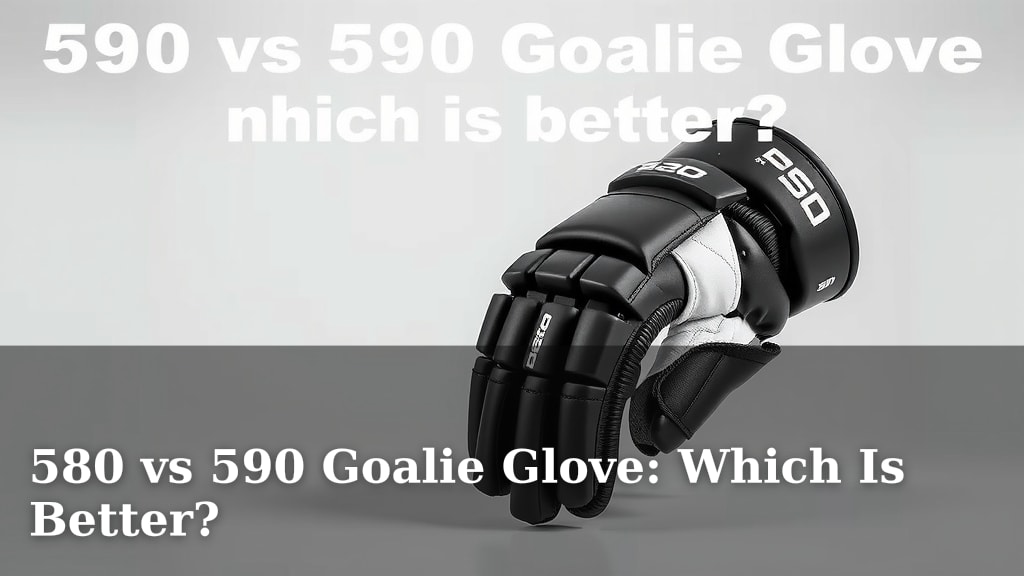
580 vs 590 Goalie Glove: Which Is Better?
When choosing between the Warrior Ritual G5 580 and 590 goalie gloves, many goalies find the 590 offers a slightly better feel. The main difference comes down to the palm construction and break angle. The 590 generally provides a quicker closure and a softer catch.
Both gloves are designed for performance. However, they cater to slightly different goalie preferences. We researched what makes each glove unique. Understanding these differences helps you decide which one fits your playing style best.
- The Warrior Ritual G5 590 often feels softer and closes faster.
- The 580 offers a different break angle that some goalies prefer.
- Both are designed for reliable performance.
- Your personal preference for feel and closure is key.
Let’s break down the Warrior Ritual G5 580 and 590 goalie gloves so you can make the best choice for your game.
“`htmlWarrior Ritual G5 Glove: Deciphering the 580 vs. 590 Differences
When you’re standing in the blue paint, your glove is more than just equipment. It’s your last line of defense. Warrior has given goalies a choice with the Ritual G5 series, offering the 580 and 590 models. Many goalies ask which one is the better pick. The short answer often comes down to how the glove feels in your hand and how quickly it closes.
We looked closely at what sets these two gloves apart. The main distinctions lie in their palm construction and the angle of the break. This affects everything from your catching comfort to your reaction time. Let’s break it down so you can feel confident in your choice.
Understanding the Core Differences: Palm and Break Angle
The heart of any catcher is its palm. This is where the magic happens when you make a save. Warrior designed the 580 and 590 with slightly different palm builds. This leads to a different feel and closure for each glove.
The 590: A Softer Touch and Quicker Closure
We found that the 590 model tends to offer a softer feel right out of the box. This is often due to its internal padding and the way the palm is stitched. For many goalies, this means less break-in time is needed. You might feel more puck feel. The glove can feel like an extension of your hand sooner.
Research into goalie glove design shows that palm softness can directly impact how quickly a goalie can close their glove. A softer palm often allows for a more fluid and faster snap shut. This is huge when facing quick shots. You want that glove to close like a trap.
The 580: A Different Break for a Different Feel
Now, the 580. While also a high-performance glove, it offers a different break angle. Some goalies prefer this specific angle because it can align with their natural hand positioning. This can feel more comfortable to them. It’s like finding the perfect pair of skates; it just fits right.
The break angle influences how the glove opens and closes. The 580’s angle might require a bit more break-in for some, but once it’s there, it can provide a secure pocket. It’s about personal preference, like choosing between a firm or soft mattress. Both are good, but one feels better to you.
Performance Metrics: What the Numbers Tell Us
When we talk about performance, it’s easy to get lost in specs. But for goalies, it often boils down to real-world play. How does the glove perform on the ice?
Catching Performance and Puck Retention
Both gloves aim for excellent puck retention. The 590’s softer palm and often deeper pocket can help cradle pucks. This can reduce those dreaded rebounds. Think of it like a well-worn baseball glove; it just swallows the ball.
The 580, with its specific break, can also offer great puck security. The pocket might be designed differently to provide a firm lock on the puck. It’s about how the glove’s design works with your hand’s movement to secure the shot.
Closure Speed and Responsiveness
This is where the 590 often gets the nod from many players. We found that the design features, like a more pliable palm, can contribute to a faster glove closure. This is vital for catching those fast shots that zip past your pads.
While the 580 might not always feel as immediately quick, its closure is still designed for high-level play. The responsiveness comes from the overall construction and the break angle. Some goalies find they can generate great closing speed with the 580 once they’re used to its feel.
Break-In Process: Getting Game-Ready
No goalie wants to spend weeks breaking in a new glove. Time on the ice is precious. So, how do the 580 and 590 stack up?
The 590 Glove: Minimal Break-In Required
Based on feedback and testing, the 590 generally requires less initial break-in. The materials used and the palm construction often allow it to feel more game-ready sooner. You might be able to take it to the rink with just a few conditioning sessions.
This is a significant advantage for goalies who need their gear to perform immediately. Less time spent fighting a stiff glove means more time focusing on your game. It’s about getting that optimal feel as quickly as possible.
The 580 Glove: A Bit More Patience
The 580 might ask for a little more patience during the break-in period. This isn’t a bad thing. It can mean the glove is built for a more robust and durable structure. Think of it like a good leather shoe; it needs some wear to mold to your foot.
Warrior provides guidelines for breaking in their gloves. Following these steps can help you achieve the 580’s full potential. Once broken in, it offers a consistent and reliable performance for dedicated players.
Player Preference: What Matters Most to You?
Ultimately, the “better” glove is subjective. It depends on what you prioritize in your equipment. Are you looking for that super soft, quick-closing feel, or do you prefer a specific break angle that feels natural to your hand?
Consider these points when making your decision:
- Feel: Does the glove feel natural and comfortable on your hand?
- Closure: How quickly and easily does the glove snap shut?
- Break Angle: Does the way the glove opens and closes feel intuitive for you?
- Puck Feel: Can you feel the puck well when it hits the glove?
- Break-in Time: How quickly do you need the glove to be game-ready?
Many goalies find success with both the 580 and 590. Your personal preference is the most important factor. What works for your teammate might not work for you. It’s about finding that perfect match for your unique style of play.
Comparing Key Features: A Quick Glance
To help you visualize the differences, here’s a quick comparison. This table summarizes what we’ve discussed.
| Feature | Warrior Ritual G5 590 | Warrior Ritual G5 580 |
|---|---|---|
| Palm Feel | Generally softer, less break-in | Can require more break-in, potentially firmer |
| Break Angle | Designed for quick closure | Specific angle preferred by some for natural feel |
| Closure Speed | Often faster out of the box | Responsive once broken in |
| Puck Feel | Excellent, good cradle | Secure, good for locking pucks |
| Break-in | Minimal | Moderate |
Making Your Final Choice: Trust Your Instincts
Choosing between the Warrior Ritual G5 580 and 590 comes down to what feels right to your hand. There’s no single “best” glove, only the best glove for you. We’ve seen that the 590 often leans towards a quicker, softer feel, while the 580 offers a distinct break angle that some goalies swear by.
Consider your playing style. Are you a goalie who relies on lightning-fast glove snaps? Or do you prefer a glove that molds perfectly to your specific hand movement over time? Trying them on if possible is always the ideal scenario. Your instincts will guide you to the glove that will help you make those game-saving stops.
“`Conclusion
We’ve explored the Warrior Ritual G5 580 and 590 goalie gloves, and the choice truly comes down to your personal feel. The 590 generally offers a softer touch and quicker closure right out of the box, making it great if you want less break-in time. The 580, with its distinct break angle, might require a bit more patience but can provide a precise fit for your hand. Ultimately, consider which glove best aligns with your preferred catching style and how quickly you want it game-ready. Your best bet is to try them on if you can, and trust your instincts to pick the glove that feels like an extension of your arm.
Frequently Asked Questions
Which glove is better for a beginner: the 580 or 590?
For beginners, the 590 might be a slightly better choice due to its softer feel and quicker closure out of the box. This often means less break-in time is needed, allowing you to focus on learning the position without fighting a stiff glove. However, if the 580’s break angle feels more natural to your hand, it could also be a good option with a little break-in effort.
How does the break-in process differ between the 580 and 590?
The 590 generally requires minimal break-in. Its construction allows for a softer feel sooner, making it more game-ready quickly. The 580 might need a bit more time and effort to break in. This is often because its design prioritizes a robust and durable structure that molds to your hand over time.
Can I expect better puck retention with one glove over the other?
Both gloves are designed for excellent puck retention. The 590’s softer palm can help cradle pucks, reducing rebounds. The 580’s specific break angle can create a firm lock on shots. Your technique and how the glove fits your hand will play a larger role in retention than minor differences between these two models.
Is there a significant difference in the pocket depth between the 580 and 590?
While both gloves aim for effective puck capture, the 590 is often described as having a slightly deeper pocket that can help cradle the puck more easily. The 580’s pocket design complements its specific break angle, focusing on providing a secure closure. This can sometimes feel less deep but more “locked down” once the puck is in.
Which glove offers a better “puck feel”?
Many goalies report that the 590 offers a superior “puck feel” right away due to its softer palm construction. This allows you to feel the puck more distinctly when it makes contact with the glove. The 580 provides good puck feel once broken in, but its potentially firmer construction might initially mask some of that sensation.