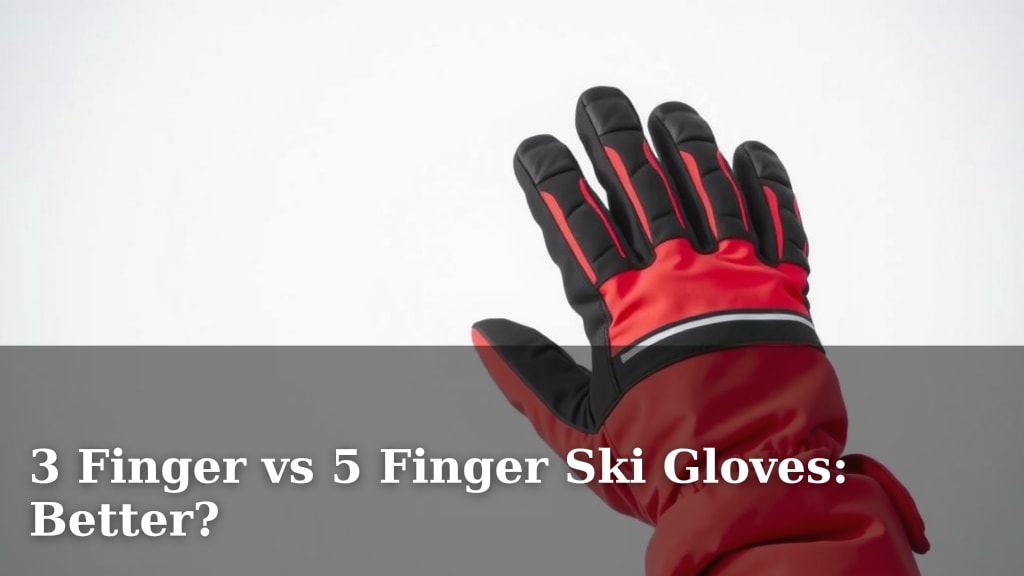
3 Finger vs 5 Finger Ski Gloves: Better?
When choosing between 3-finger and 5-finger ski gloves, the answer really depends on your personal preference and the conditions you’ll be skiing in. Generally, 5-finger gloves offer better dexterity for tasks like adjusting gear, while 3-finger mittens are warmer due to less surface area for heat to escape.
Both styles aim to keep your hands warm and dry on the slopes. Many skiers find that the warmth of a 3-finger mitten is a big plus on frigid days. Others prioritize the freedom of movement that 5-finger gloves provide for managing zippers and phone screens.
- 5-finger gloves give you more finger freedom.
- 3-finger mittens are typically warmer.
- Your choice depends on the weather and your needs.
- Think about how much you need to use your hands.
We’ve researched the differences and found out what makes each style work best. Let’s walk through exactly how to pick the right pair for your next ski trip.
Choosing Your Ideal Ski Glove: 3-Finger vs. 5-Finger
When you’re gearing up for a day on the slopes, your hands are your command center. How they feel can make or break your experience. That’s where the glove versus mitten debate gets interesting, but it’s not just about full mittens versus gloves. We’re looking at a specific style: the 3-finger ski glove. Is it better than the traditional 5-finger ski glove? We’ve researched the nuances, and the answer really comes down to balancing warmth and dexterity for your specific needs.
Understanding the 3-Finger Ski Glove Design
Think of a 3-finger ski glove as a hybrid. It’s not quite a full glove with five individual fingers, nor is it a full mitten. Instead, you typically get one compartment for your thumb, one for your index finger, and then a larger section that houses your other three fingers together. This design aims to give you some of the warmth benefits of a mitten while retaining a bit more individual finger control than a traditional mitten might offer.
The Warmth Factor: Why 3 Fingers Can Be Hotter
One of the main reasons skiers lean towards 3-finger gloves is superior warmth. Why? It’s simple physics. When your fingers are bundled together in a single compartment, they share and generate heat more effectively. This is similar to why mittens are generally warmer than gloves. With fewer separate spaces for heat to escape, your hands stay warmer for longer, especially in very cold or windy conditions. Many skiers find this a huge advantage on frigid days when frostbite feels like a real threat.
Dexterity: What Do You Lose (and Gain)?
On the flip side, having three fingers together means less individual movement. You won’t have the same fine motor control as you would with a 5-finger glove. Tasks like fiddling with ski boot buckles, adjusting your goggles, zipping up your jacket, or even using your smartphone can become more challenging. However, the separate index finger does offer a slight edge in dexterity over a full mitten, allowing for a bit more precision when needed.
Exploring the 5-Finger Ski Glove Advantage
The classic 5-finger ski glove is designed to mimic the natural structure of your hand. Each finger has its own insulated compartment. This setup prioritizes individual finger movement and provides the greatest range of motion.
The Benefit of Individual Finger Control
With 5-finger gloves, you can easily perform all those small, intricate tasks without much thought. Need to grab your lift ticket? Adjust a strap on your backpack? Send a quick text to your ski buddy? A 5-finger glove makes it simple. This convenience is a major draw for many skiers, especially those who frequently need to interact with their gear or devices on the go.
Warmth Considerations for 5-Finger Gloves
While offering excellent dexterity, 5-finger gloves can sometimes be less warm than their 3-finger or mitten counterparts. The extra seams and individual compartments can create more points for heat to escape. However, modern technology and insulation materials have greatly improved the warmth of 5-finger gloves. High-quality insulation, waterproof-breathable membranes, and thoughtful design can ensure your hands stay toasty even in cold weather, but they might not reach the same peak warmth as a well-designed 3-finger glove or mitten in extreme conditions.
Making the Right Choice for Your Skiing Style
So, how do you decide which is best for you? It boils down to what you value most for your skiing experience.
When to Reach for 3-Finger Gloves
We found that 3-finger gloves are an excellent choice for skiers who:
- Prioritize warmth above all else.
- Plan to ski in very cold, windy, or wet conditions.
- Don’t need to frequently use their hands for intricate tasks on the slopes.
- Appreciate the idea of a warmer glove without the complete loss of dexterity found in a full mitten.
Think of those days where the thermometer is in the single digits, and the wind is whipping. A 3-finger glove can be your best friend for keeping those fingers from going numb. Many parents also find them a good option for children, as bundled fingers are easier for kids to keep warm.
When 5-Finger Gloves Shine
You’ll likely prefer 5-finger gloves if you:
- Need maximum dexterity for tasks like adjusting bindings, taking photos, or using your phone.
- Tend to ski in milder conditions or are less sensitive to cold.
- Are looking for the most natural feel and freedom of movement.
- Want the familiar feel of a traditional glove.
If you’re the type of skier who is always tweaking their gear, stopping for photos, or needs easy access to your phone for trail maps, the 5-finger glove offers that unrestricted usability.
Comparing Key Features in a Table
To help you visualize the differences, here’s a quick comparison:
| Feature | 3-Finger Ski Glove | 5-Finger Ski Glove |
|---|---|---|
| Warmth | Generally warmer due to bundled fingers. | Can be warm, but typically less so than 3-finger. |
| Dexterity | Moderate; one finger separate, others bundled. | High; full individual finger movement. |
| Best For | Very cold conditions, prioritizing warmth. | Milder conditions, prioritizing dexterity and tasks. |
| Ease of Use | Slightly less intuitive for fine motor skills. | Very intuitive for all hand movements. |
Material Matters: Insulation and Waterproofing
Beyond the finger count, the quality of materials plays a huge role in performance. Both 3-finger and 5-finger gloves rely on good insulation (like synthetic fills or down) and waterproof-breathable shells (like Gore-Tex or similar membranes). We found that even the warmest 3-finger glove won’t perform well if it leaks water. Likewise, a dexterous 5-finger glove can still leave your hands cold if the insulation is poor. Always check the specs for the technologies used.
Considering Your Personal Needs Checklist
To help you land on the perfect pair, ask yourself these quick questions:
- How cold does it typically get where I ski?
- Do I often need to use my hands for small tasks?
- Am I someone who naturally gets cold hands?
- What kind of skiing do I do most (e.g., lift-served, backcountry)?
- Is ease of putting on and taking off important?
- How important is budget vs. long-term performance?
Answering these can clarify your priorities and guide you toward the style that will serve you best on your next snowy adventure.
Conclusion
Deciding between 3-finger and 5-finger ski gloves comes down to your personal priorities on the mountain. If you’re battling extreme cold and want maximum warmth, the 3-finger glove, with its bundled fingers, offers a noticeable advantage. For those who need to manipulate gear, use their phone, or simply prefer the feel of individual finger movement, the 5-finger glove is the clear winner. We found that both styles can be warm and protective, but your skiing style and the typical conditions you face will ultimately guide you to the perfect fit for your hands. Now that you know the differences, check the weather forecast for your next trip and make your choice!
Frequently Asked Questions
Are 3-finger ski gloves really that much warmer than 5-finger gloves?
Yes, generally 3-finger gloves are warmer. By grouping three fingers together, more body heat is shared and retained, reducing heat loss. This design is very similar to how traditional mittens achieve superior warmth.
Can I still do detailed tasks with 3-finger ski gloves?
You can, but it will be more challenging than with 5-finger gloves. While your index finger is free for some tasks, manipulating small items like zippers or buttons with your bundled three fingers requires more effort.
Will 5-finger ski gloves be warm enough for very cold days?
Modern 5-finger gloves with advanced insulation and waterproof materials can be very warm, even in cold conditions. However, in extreme cold or wind, a 3-finger glove or a full mitten often provides an extra layer of warmth.
Which type of glove is better for someone who gets cold hands easily?
If you consistently struggle with cold hands, a 3-finger ski glove is likely a better choice for you. Their design prioritizes trapping body heat, which can make a significant difference on frigid ski days.
Is there a difference in grip between 3-finger and 5-finger ski gloves?
While not a major factor for most skiers, 5-finger gloves typically offer a slightly better grip on ski poles and equipment due to the individual finger articulation. The 3-finger design can feel a bit more cumbersome for precise gripping actions.