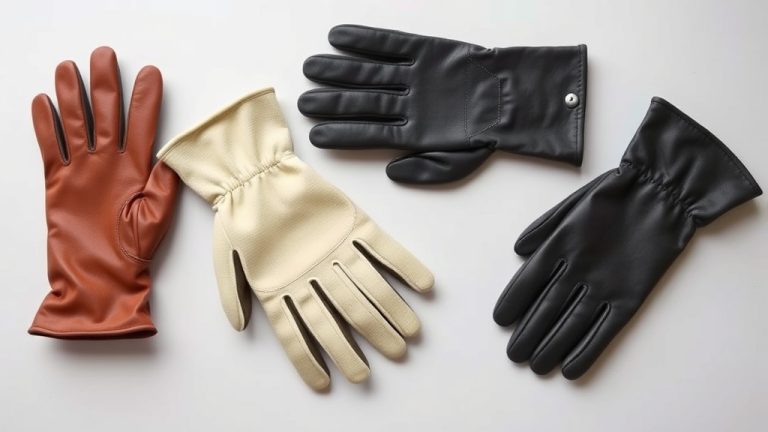
How to Measure Men’s Glove Size Accurately
Figuring out your glove size for men is pretty straightforward. You’ll generally need to measure the circumference of your palm and compare it to a sizing chart. Most glove makers use this measurement to determine your fit, ensuring comfort and proper function for whatever you need them for, whether it’s sports or work.
Getting the right glove size means your hands will feel comfortable and protected. Too small, and they might feel tight and restrict movement. Too big, and you could lose dexterity and control. We’ve found that understanding your measurements is the first step toward finding that perfect, snug fit.
- Measure your palm circumference.
- Consult a glove size chart.
- Consider glove type (e.g., batting, work, dress).
- Try them on if possible for the best feel.
Let’s walk through exactly how to measure your hand and find your perfect glove size.
Finding Your Perfect Men’s Glove Size
So, you need to know your glove size for men? It’s easier than you might think! The most common way to find your size is by measuring the circumference of your palm. This measurement is key for most glove manufacturers. It helps them create gloves that fit just right, so you’ll feel comfortable and have full control whether you’re playing sports, working outdoors, or just need some extra warmth.
Why Glove Fit Matters So Much
Getting the right fit is essential. Gloves that are too tight can cut off circulation and make your hands feel numb. They can also restrict your movement, making it hard to grip things properly. On the other hand, gloves that are too big can be clumsy. You might lose dexterity, and they could even slip off at the worst possible moment. We’ve found that a good fit feels like a second skin, offering both protection and freedom.
How to Measure Your Hand for Gloves
Ready to get that perfect measurement? You’ll only need a flexible measuring tape. If you don’t have one, a piece of string or a strip of paper and a ruler will work just fine. It’s best to have someone help you, but you can manage it on your own too. Make sure your hand is relaxed and not clenched.
Step 1: Measure Your Palm Circumference
Start by holding your hand out flat, with your fingers together. Imagine you’re about to shake someone’s hand, but keep your fingers joined. Wrap the measuring tape around the widest part of your palm. This is usually just below your knuckles, across your knuckles if you’re measuring that way, or slightly above them. Make sure the tape is snug but not too tight. Don’t squeeze your hand. Take the measurement in inches or centimeters. This is the number you’ll use to find your glove size.
Step 2: Consider Your Hand Length (Optional but Helpful)
Some guides might also ask for your hand length. To measure this, place your hand flat on a piece of paper, with your palm down and your fingers together. Make a mark at the tip of your middle finger and another mark at the base of your palm. The distance between these two marks is your hand length. This measurement is less common for general glove sizing but can be useful for specific glove types, like work gloves or specialized sports gloves.
Understanding Glove Size Charts
Once you have your palm measurement, the next step is to compare it to a glove size chart. Most manufacturers provide these charts online or on their product packaging. You’ll typically find a column for your hand measurement and a corresponding glove size.
Reading the Size Chart
Most charts are pretty straightforward. You’ll see measurements listed, often in inches or centimeters. Find the number that’s closest to your palm circumference. For example, if your palm measures 9 inches, you’ll look for the size that corresponds to 9 inches. If you’re between sizes, many experts suggest sizing up. This usually ensures a more comfortable fit and prevents the gloves from feeling too tight. We found that a little extra room is often better than being too snug.
Example Size Chart (General Guide)
Here’s a general idea of how a men’s glove size chart might look. Keep in mind that specific brands can vary, so always check their chart.
| Palm Circumference (inches) | Glove Size |
|---|---|
| 7.0 – 7.5 | Small |
| 7.5 – 8.0 | Medium |
| 8.0 – 8.5 | Large |
| 8.5 – 9.0 | X-Large |
| 9.0 – 9.5 | XX-Large |
Different Types of Gloves, Different Fits?
It’s important to remember that the “perfect” fit can also depend on the type of glove you’re buying. Work gloves, for example, might need to be a bit looser to accommodate liners or allow for a full range of motion when handling tools. Dress gloves, on the other hand, are often designed to be more form-fitting. Let’s look at a few common types.
Sports Gloves (e.g., Baseball, Golf)
For sports gloves, precision is often key. A baseball batting glove needs to feel secure without restricting your swing. Golf gloves are similar; you want a snug feel for a solid grip. We found that many athletes prefer gloves that are snug but not constricting. For these, sticking precisely to the measurement is often best.
Work Gloves
When you’re doing heavy-duty work, you might want a little extra room. This allows for better air circulation and ensures you can move your hands freely, even when wearing thinner liners in cold weather. Some work gloves even have adjustable cuffs, which can help you fine-tune the fit. For these, a slightly looser fit than your exact measurement might be preferable.
Dress Gloves
Dress gloves are usually made of materials like leather. They are meant to look sleek and provide a bit of warmth or protection. The expectation is a tailored, close fit. When measuring for dress gloves, aim for your exact size or maybe a half-size up if you are between measurements, so they don’t look baggy. Many guides suggest measuring in centimeters for these finer fits.
The Best Way to Know for Sure: Try Them On!
While measurements and charts are incredibly helpful, there’s no substitute for actually trying on a pair of gloves. If you can, visit a store and put them on. Wiggle your fingers. Make a fist. Can you grip an imaginary object comfortably? Do they feel tight anywhere, or are they loose and baggy? This hands-on approach is the ultimate test for finding your ideal glove size. We know online shopping is convenient, but if possible, try them on first!
Quick Checklist for Finding Your Glove Size
Here’s a handy recap to help you find your perfect fit:
- Get a flexible measuring tape.
- Measure the widest part of your palm.
- Round your measurement to the nearest size on the chart.
- If between sizes, usually size up.
- Consider the glove’s intended use.
- Try them on whenever possible!
Conclusion
You’ve learned how to accurately measure your hand for men’s gloves. Remember, measuring your palm circumference is the primary step. Always compare this to a reliable size chart. We also found that the glove’s intended use can affect your best fit. Work gloves might need a little extra room, while dress gloves should be snug. Your next step is to find a glove chart from your favorite brand or the one you plan to buy. Then, confidently select the size that feels just right for you.
Frequently Asked Questions
What’s the best way to measure my hand for gloves if I don’t have a flexible tape measure?
If you don’t have a flexible tape measure, you can use a piece of string or a strip of paper. Wrap it around your palm at its widest point, just below your knuckles. Mark where the string or paper meets. Then, lay it flat and measure the marked length with a standard ruler. This measurement will give you the circumference you need.
I’m between two sizes on the glove chart. What should I do?
When you fall between sizes, it’s generally best to size up. This usually provides a more comfortable fit and prevents the gloves from feeling too tight, which can restrict movement and circulation. We’ve found that a little extra room is often better than a glove that’s too snug.
Do I need to measure my hand differently for different types of gloves?
While palm circumference is the standard for most gloves, the ideal fit might vary slightly. For sports gloves, a precise fit is often desired for grip. Work gloves might benefit from a slightly looser fit for dexterity and comfort during long tasks. Dress gloves usually aim for a more tailored, form-fitting feel.
How important is hand length compared to palm circumference for glove sizing?
Palm circumference is the most common and critical measurement for determining glove size. Hand length is less frequently used but can be helpful for specialized gloves where finger length is a key factor. For most general purposes, focusing on your palm circumference measurement will lead you to the correct glove size.
Can I use my glove size from one brand with another brand?
Not always. While many brands use similar sizing standards, there can be slight variations between manufacturers. It’s always recommended to check the specific size chart provided by the glove brand you’re interested in. This ensures you get the most accurate fit for their particular gloves.