8 Mil vs 6 Mil Gloves: What’s the Difference?
When choosing between 8 mil vs 6 mil gloves, the main difference is their thickness. 8 mil gloves are thicker and offer better protection and durability than 6 mil gloves. This means 8 mil gloves are generally stronger and last longer.
The mil measurement refers to the thickness of the glove material. Higher mil numbers indicate thicker gloves. This increased thickness can translate to better resistance against punctures and tears. It’s important to consider what tasks you’ll be performing when deciding which thickness is right for you.
- 8 mil gloves are thicker, offering superior durability.
- 6 mil gloves are thinner, providing a good balance of protection and dexterity.
- Thickness impacts puncture and tear resistance.
- Choose based on the specific job requirements.
Let’s break down the key distinctions and help you decide which glove thickness is the best fit for your needs.
“`htmlUnderstanding Glove Thickness: 6 Mil vs. 8 Mil
So, you’re looking at gloves and wondering about the difference between 6 mil and 8 mil. It’s a fair question! The ‘mil’ simply refers to the thickness of the glove material. Think of it like measuring the width of a piece of paper; a higher number means a thicker material. This thickness is the primary factor dictating how much protection and durability you can expect from your gloves.
When we talk about mil, we’re talking about one-thousandths of an inch. So, an 8 mil glove is 0.008 inches thick, and a 6 mil glove is 0.006 inches thick. It might not sound like much, but that 0.002-inch difference can make a real impact on performance and feel.
What Does 6 Mil Offer You?
Gloves in the 6 mil range are quite common. They strike a great balance between offering decent protection and maintaining a good sense of touch, or dexterity. You’ll find these gloves are often used for tasks where you need to feel what you’re doing, like handling smaller objects or performing delicate work.
Everyday Protection and Comfort
For many common jobs, a 6 mil glove is perfectly adequate. Think about tasks like light cleaning, food service, or simple automotive maintenance. They provide a good barrier against common contaminants and offer some resistance to minor abrasions. Many people find them comfortable enough for extended wear without feeling too bulky.
Balancing Protection and Sensitivity
The key advantage of 6 mil gloves is their ability to let you feel what you’re working with. This is essential when you need to grip tools precisely or handle items that require a gentle touch. If you’ve ever worn gloves that make your hands feel clumsy, you’ll appreciate the dexterity a 6 mil glove can provide. It’s a solid choice when you need a reliable barrier but don’t want to sacrifice your sense of touch.
Why Choose 8 Mil Gloves?
Now, let’s talk about 8 mil gloves. These are the heavy-hitters when it comes to glove thickness. Their extra heft means they’re built to withstand more demanding situations. If your work involves potential hazards or rougher conditions, 8 mil might be your go-to choice.
Enhanced Durability and Strength
The extra thickness of 8 mil gloves directly translates to greater durability. They are less likely to tear or puncture when exposed to sharp objects or rough surfaces. This makes them ideal for tasks where your gloves might take a beating. You get a stronger, more robust barrier between your hands and the environment.
Superior Resistance to Punctures and Tears
When you’re dealing with anything sharp, sticky, or abrasive, 8 mil gloves offer superior resistance. Research indicates that thicker materials generally perform better against puncture tests (National Institute for Occupational Safety and Health). This means you can worry less about rips and holes, which is crucial for maintaining a safe barrier. For example, mechanics working with grease and sharp parts, or individuals handling potentially contaminated materials, often prefer the added security of 8 mil.
When Tactile Feel Is Less Critical
While 8 mil gloves offer more protection, they might slightly reduce your sense of touch compared to thinner options. If your job involves extremely fine motor skills or intricate manipulation of tiny objects, you might find them a bit more cumbersome. However, for most applications where robust protection is the priority, the trade-off is well worth it.
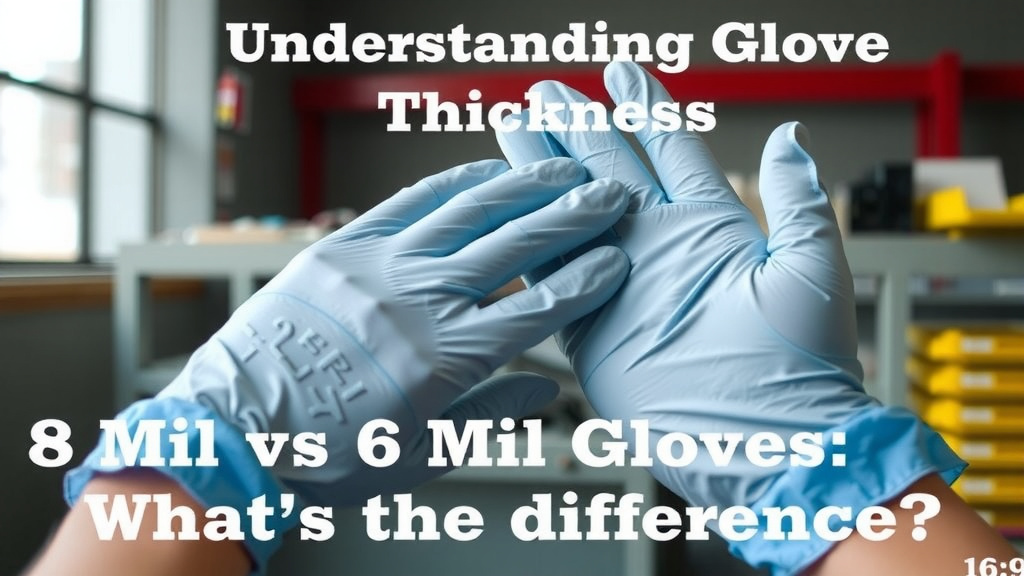
Direct Comparison: 6 Mil vs. 8 Mil
Let’s lay it out side-by-side to make the decision easier. Think of it like choosing between a standard t-shirt and a thicker sweatshirt – both keep you covered, but one offers more warmth and durability.
| Feature | 6 Mil Gloves | 8 Mil Gloves |
|---|---|---|
| Thickness | 0.006 inches | 0.008 inches |
| Protection Level | Good for light to moderate tasks | Excellent for moderate to heavy tasks |
| Durability | Moderate | High |
| Puncture/Tear Resistance | Moderate | High |
| Dexterity/Tactile Feel | High | Moderate |
| Common Uses | Food prep, general cleaning, light assembly | Automotive, janitorial, industrial, medical exams |
Which One Is Right for Your Task?
Your daily tasks are the biggest clue. If you’re working in a medical setting, like a clinic or hospital, you’ll often see 6 mil gloves used for general examinations. However, for procedures involving greater risk of fluid exposure or sharps, 8 mil gloves might be recommended by health organizations (Centers for Disease Control and Prevention). In industrial settings, mechanics and technicians frequently opt for 8 mil for their resilience against grease, chemicals, and rough handling.
Consider the environment you’ll be working in. Are there sharp edges? Are you dealing with potentially hazardous substances? The answers to these questions will guide you toward the appropriate thickness. Don’t over- or under-protect yourself – choose the glove that fits the job.
Making the Final Choice: A Quick Checklist
Still on the fence? Let this quick checklist help you narrow down your choice:
- Assess the risk: How likely are punctures or tears?
- Consider the duration: Will you wear them for hours?
- Evaluate dexterity needs: How crucial is your sense of touch?
- Think about chemical exposure: Are you handling solvents or harsh cleaners? (Note: Thickness is one factor; chemical resistance ratings are also vital).
- Budget versus protection: While not always a huge difference, consider the cost per glove.
- Personal preference: Sometimes, it just comes down to what feels most comfortable and secure for you.
Conclusion
So, you’ve learned that the main difference between 6 mil and 8 mil gloves comes down to their thickness. Thicker 8 mil gloves offer superior protection and durability for tougher jobs, while 5 mil gloves provide a great balance of protection and the dexterity you need for more delicate tasks. Your specific work environment and the risks involved should guide your choice.
Don’t overthink it! Review the risks, consider your comfort, and choose the glove that best suits your daily grind. You’ll feel more secure and comfortable knowing you’ve made the right selection for your hands.
Frequently Asked Questions
Are 8 mil gloves always better than 6 mil gloves?
Not necessarily. While 8 mil gloves offer more protection, they can reduce your sense of touch. For tasks requiring fine motor skills, 6 mil gloves might be a better fit. The “better” glove depends entirely on the specific job you’re doing.
Can I use 6 mil gloves for handling chemicals?
For basic chemical resistance, 6 mil gloves can offer some protection. However, always check the glove’s specific chemical resistance rating. Thickness is only one factor; the material composition is critical when handling chemicals.
Are 8 mil gloves suitable for medical use?
Yes, 8 mil gloves are often used in medical settings, especially when there’s a higher risk of puncture or exposure to bodily fluids. For general examinations, 6 mil gloves are common, but for more demanding procedures, 8 mil provides that extra layer of security.
Will 8 mil gloves make my hands sweat more?
Due to their thickness, 8 mil gloves can sometimes feel warmer and may lead to increased sweating compared to thinner 6 mil gloves. If hand comfort during long wear is a major concern, consider gloves with good breathability features.
Is the difference between 6 mil and 8 mil really noticeable?
Yes, the 0.002-inch difference in thickness is often noticeable. You’ll typically feel increased durability and slightly less sensitivity with 8 mil gloves. For most users, the enhanced protection of 8 mil is a clear benefit for tougher tasks.