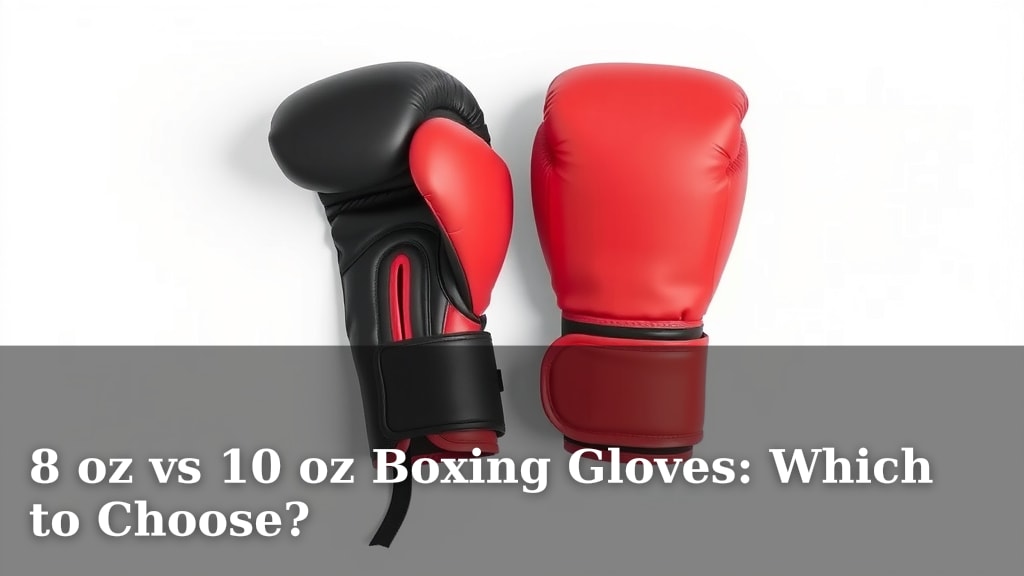
8 oz vs 10 oz Boxing Gloves: Which to Choose?
Choosing between 8 oz vs 10 oz boxing gloves depends mostly on your purpose, like training or sparring. For general training, 10 oz gloves offer better protection for your hands and sparring partners. If you’re looking for maximum speed for bag work or pad drills, 8 oz gloves might feel quicker, but they offer less cushioning.
We found that glove weight impacts hand safety and the intensity of training sessions. Lighter gloves are often used for speed work, while heavier gloves are preferred for sparring to reduce impact. Understanding these differences helps you pick gloves that suit your boxing goals and protect your hands.
- 10 oz gloves are generally better for sparring and training.
- 8 oz gloves are often used for bag work and pad drills for speed.
- Glove weight affects hand protection and impact absorption.
- Consider your primary training activity when choosing.
Let’s break down the main differences between 8 oz and 10 oz boxing gloves so you can make the best choice for your training.
Weighing Your Options: 8 oz vs. 10 oz Boxing Gloves
So, you’re standing at the crossroads of glove choice, looking at the 8 oz and 10 oz options. It’s a common spot to be in, and picking the right weight can truly make a difference in your training. We’ve found that this choice often boils down to what you’ll be doing most inside the gym. Let’s get into the nitty-gritty to help you figure out which weight is your perfect match.
Understanding Glove Weight and Its Impact
When we talk about glove weight, we’re referring to the amount of padding inside. This padding isn’t just for show; it’s designed to protect both your hands and your training partners. Think of it like shock absorbers on a car. More weight generally means more padding and better impact absorption.
The Role of Padding in Boxing
Your hands are your most important tools in boxing. They take a beating every time you strike a bag, pads, or an opponent. The right amount of padding helps to disperse the force of impact. This can prevent injuries like sprains, fractures, and even long-term damage to your knuckles and wrists.
Safety First: Protecting Your Hands and Your Partner
Many boxing coaches and health professionals stress the importance of proper hand protection. Using gloves that are too light for certain activities can lead to hand injuries. Likewise, if you’re sparring, gloves with adequate padding are essential for the safety of the person you’re working with. It’s a two-way street of protection!
Exploring the 8 oz Boxing Glove
The 8 oz boxing glove is on the lighter end of the spectrum. These gloves are designed for speed and agility. They feel much quicker on your hands, allowing for faster punches and combinations.
Who Should Use 8 oz Gloves?
If your primary focus is on bag work, shadow boxing, or pad drills where speed is key, 8 oz gloves might appeal to you. They let you really feel the snap of your punches. Boxers looking to improve their hand speed and explosiveness often gravitate towards this weight.
The Trade-Off: Less Cushioning
However, with that speed comes a trade-off. 8 oz gloves have less padding. This means they offer less cushioning for your hands. Repeatedly hitting a heavy bag with 8 oz gloves can take a toll on your knuckles and wrists over time. Many training facilities have rules about using heavier gloves for anything beyond basic drills precisely because of this.
Diving into the 10 oz Boxing Glove
The 10 oz glove is often considered the standard for many types of boxing training. It strikes a good balance between protection and performance.
When 10 oz Gloves Shine
We found that 10 oz gloves are highly recommended for sparring. The extra padding provides a crucial layer of protection for both you and your partner. They help to soften the blows, reducing the risk of injury during those intense sparring sessions. They are also a solid choice for general training, including bag work and mitt work, when you want more hand protection.
Protection vs. Speed: Finding the Balance
While not as light and quick as 8 oz gloves, 10 oz gloves still allow for good speed. You might not feel quite as lightning-fast, but the added protection is often worth it. Many boxers use 10 oz gloves for the majority of their training, only switching to lighter gloves for very specific speed drills if needed.
Key Differences at a Glance
To make it super clear, let’s summarize the main points. Think of it as a quick reference guide for your decision-making process.
| Feature | 8 oz Gloves | 10 oz Gloves |
|---|---|---|
| Primary Use | Speed drills, bag work, pad work | Sparring, general training, bag work |
| Hand Protection | Less | More |
| Impact Absorption | Lower | Higher |
| Feel | Quicker, lighter | More substantial, protective |
| Injury Risk (for hands) | Higher (with heavy use) | Lower |
What Does the Science Say About Glove Weight?
While you won’t find extensive scientific studies comparing just 8 oz and 10 oz gloves for everyday training, general principles of biomechanics and injury prevention apply. Research in sports medicine consistently shows that adequate padding reduces the peak forces transmitted during impact (NCBI). This is why heavier gloves are standard for sparring, as they are designed to better manage the energy of a punch. For instance, guidelines for combat sports often mandate minimum glove weights for safety during sparring, usually starting at 10 oz or higher depending on the participant’s weight class.
Making Your Final Choice: A Quick Checklist
To help you decide, ask yourself these questions:
- What is your primary training activity?
- How much do you prioritize hand protection?
- Do you spar regularly?
- What does your coach recommend?
- Are your hands prone to injury?
Based on your answers, you can lean towards the gloves that best suit your needs.
Conclusion
You’ve learned that the 8 oz vs 10 oz boxing glove decision hinges on your training goals. For maximum speed in bag work or pad drills, 8 oz gloves offer a lighter feel. However, 10 oz gloves provide the essential padding for safer sparring and general training. We’ve seen that more weight means better impact absorption for your hands and your partners. So, consider what you do most in the gym. If you’re unsure, many coaches recommend starting with 10 oz gloves for a well-rounded approach to protection and performance.
Frequently Asked Questions
Are 8 oz gloves too light for heavy bag work?
Yes, 8 oz gloves can be too light for extensive heavy bag work. Repeated impact without sufficient padding increases your risk of hand injuries like knuckle pain or wrist strain over time. You’ll find 10 oz gloves offer better protection for this type of training.
Can I spar with 8 oz gloves?
It’s generally not recommended to spar with 8 oz gloves. They offer less cushioning, which can be dangerous for both you and your sparring partner. Most gyms require at least 10 oz gloves for sparring to ensure safety and reduce the force of impact.
What if my hands are prone to injury?
If your hands are prone to injury, you should definitely lean towards heavier gloves like the 10 oz option. The increased padding provides superior shock absorption, which is crucial for protecting your knuckles, wrists, and joints during any striking activity.
Do coaches prefer one weight over the other?
Most boxing coaches will recommend 10 oz gloves for general training and sparring because they prioritize safety. While they might allow lighter gloves for very specific speed drills, 10 oz is usually the go-to for most of your gym time to build good habits and protect your hands.
Will 10 oz gloves slow down my punches too much?
You might notice a slight difference in speed compared to 8 oz gloves, but it’s usually not significant enough to hinder your progress. The added protection from 10 oz gloves often outweighs the minor speed difference, especially when considering long-term hand health.