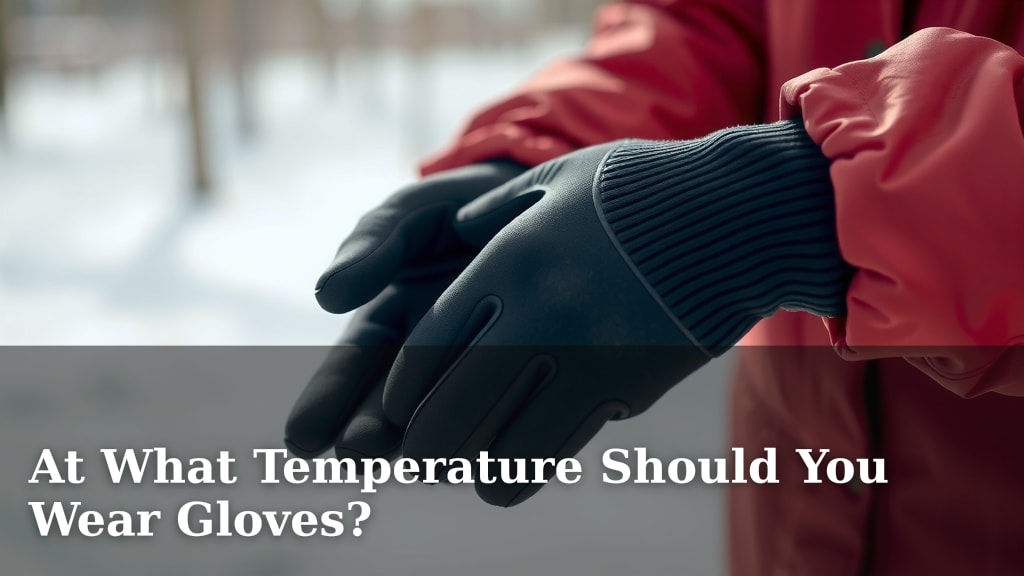
At What Temperature Should You Wear Gloves?
You should wear gloves when the temperature drops to around 40-50°F (4-10°C), depending on your personal comfort and activity level. Below 40°F, gloves become almost essential for keeping your hands warm and preventing discomfort or frostnip. Think of it as your body’s signal that it’s time for extra protection.
The decision isn’t just about the mercury reading, though. We found that factors like wind chill and whether you’re just standing around or actively moving play a big role. Your own circulation and how quickly your hands get cold are also key considerations in this chilly equation.
Here’s the quick rundown:
- General rule: start thinking about gloves around 40-50°F.
- Below 40°F, gloves are usually a must.
- Wind makes it feel colder – so glove up sooner if it’s windy.
- Your personal comfort is a big factor too!
Let’s walk through exactly when and why you might want to reach for a pair of gloves.
“`htmlWhen Should You Consider Wearing Gloves?
Most of us wonder when it’s officially cold enough for gloves. We found that a good general rule to start with is when the temperature hits the 40-50°F (4-10°C) range. This is often when your hands might start to feel that initial chill, especially if there’s a breeze. Think of it as a friendly reminder from your body.
Below 40°F, however, gloves become much more than a suggestion. They’re often necessary to prevent discomfort and to protect your skin from the cold. For many people, their hands get cold quickly, making even slightly cool temperatures a reason to reach for hand protection.
Understanding Temperature Thresholds for Gloves
The exact temperature where you’ll want gloves can vary from person to person. We found that many factors play a role. It’s not just a single number. Your personal circulation and how sensitive your hands are to the cold are big players.
The 40°F (4°C) Mark
Many experts suggest that around 40°F is when your hands start to lose heat rapidly. At this point, the risk of discomfort or even frostnip increases. This is a good benchmark for when to start thinking seriously about wearing gloves, especially if you’ll be outside for any length of time.
Below Freezing: A Clear Sign for Gloves
Once the temperature dips below 32°F (0°C), gloves are almost always a necessity. The cold is much more intense, and your extremities are especially vulnerable. Protecting your hands from freezing temperatures is key to preventing serious issues like frostbite.
Beyond the Thermometer: Other Factors to Consider
While the thermometer gives you a number, it doesn’t tell the whole story. The perceived temperature can be very different from the actual air temperature. You need to account for other elements to make the best decision for your comfort and safety.
The Impact of Wind Chill
Wind chill is a significant factor. When it’s windy, the air feels much colder than it actually is. We found that wind can strip away the warm layer of air around your skin, making you feel colder faster. On a windy 45°F day, it might feel like it’s 35°F. In these conditions, you’ll want gloves much sooner than you would on a calm day.
Think of it like this: a gentle breeze on a warm day feels nice. But a strong wind on a cool day feels like an icy blast. It can drastically reduce the temperature your skin feels.
Your Activity Level Matters
What are you planning to do? If you’re going for a brisk walk, shoveling snow, or engaging in any physical activity, your body generates more heat. This means you might be comfortable with slightly cooler temperatures before needing gloves. Your hands will be working, keeping blood flowing.
On the other hand, if you’re just standing around, waiting for a bus, or cheering at a sporting event, your body isn’t generating much extra heat. In these situations, your hands will get cold much faster. You’ll likely want gloves even when the temperature is milder, perhaps in the 50s°F.
Moisture and Wetness
Water conducts heat away from your body much faster than air does. If your hands are wet from rain, snow, or sweat, they will get cold much more quickly. Even on a relatively mild day, if it’s raining or snowing, wearing waterproof gloves is a smart move.
We found that damp hands can feel significantly colder. This is why layering and choosing the right material for your gloves is so important, especially in damp conditions. Your hands can go from comfortably cool to uncomfortably cold in a hurry.
Personal Considerations for Glove Wearing
Everyone is different. What feels cold to one person might be perfectly fine for another. Your body’s unique responses play a huge role in determining when you should put on gloves.
Individual Circulation and Sensitivity
Some people naturally have better circulation in their extremities than others. If you tend to get cold hands and feet easily, you’ll likely need gloves when the temperature is warmer than someone with excellent circulation. We found that factors like age and certain medical conditions can affect circulation.
Pay attention to your own body’s signals. Do your fingers tingle or go numb quickly when it’s cool? That’s your body telling you it’s time for protection. Don’t ignore these cues.
The “Comfort Zone” Checklist
To help you decide, consider these points:
- Is the temperature below 50°F and dropping?
- Is it windy, making it feel colder than it is?
- Are your hands already starting to feel cool?
- Will you be standing still or moving actively?
- Are your hands likely to get wet?
- Have you felt uncomfortable in similar conditions before?
A Quick Guide to Glove Temperature Needs
To make it easier, we’ve put together a simple table. This isn’t an exact science, but it gives you a good idea of when gloves are generally recommended. Remember, your personal comfort is the final deciding factor!
| Temperature Range | General Recommendation | Notes |
|---|---|---|
| Above 50°F (10°C) | Usually not needed | Maybe for very sensitive hands or light wind. |
| 40-50°F (4-10°C) | Consider gloves | Especially with wind or if you’re not active. |
| 30-40°F (-1 to 4°C) | Likely needed | Recommended for most outdoor activities. |
| Below 30°F (-1°C) | Essential | Protect against cold and prevent frostnip/frostbite. |
Conclusion
Deciding when to wear gloves is more art than exact science. While 40-50°F (4-10°C) is a good starting point, remember to factor in wind chill, your activity level, and how your own body feels. Wet conditions and personal circulation also play a big role. Don’t just rely on the thermometer; listen to your body’s cues. Your comfort and protection are what truly matter when the temperature drops.
So, next time you step outside and feel that chill, check the wind, consider what you’ll be doing, and reach for your gloves if your hands feel the slightest bit uncomfortable. Your fingers will thank you!
Frequently Asked Questions
How do I know if my hands are too sensitive for the cold?
If your fingers tingle, go numb, or feel uncomfortably cold very quickly, even in mild temperatures, you likely have sensitive hands. Pay attention to when you start to feel discomfort – that’s your personal signal to put on gloves.
Are waterproof gloves always better in cold weather?
Waterproof gloves are best when there’s a risk of rain or snow. If it’s just dry and cold, breathable gloves can keep your hands warm without making them sweaty, which can also lead to coldness. Choose based on the likely conditions.
Does wind chill really make that much of a difference for gloves?
Yes, wind chill can make a big difference. It strips away the insulating layer of warm air around your hands, making it feel much colder. On a windy day, you’ll likely want gloves at a higher temperature than on a calm day.
Should I wear gloves if I’m just running a quick errand?
If you’re only outside for a minute or two, you might be fine without them, especially if it’s just barely cool. However, if your hands tend to get cold easily or the temperature is approaching 40°F, it’s better to wear them to avoid discomfort.
What’s the difference between frostnip and frostbite, and do gloves prevent them?
Frostnip is a mild form of frostbite, causing numbness and tingling. Frostbite is more severe and can damage skin and tissue. Wearing gloves when it’s very cold (below 30°F or –1°C) is essential to prevent both by keeping your hands warm and protected.