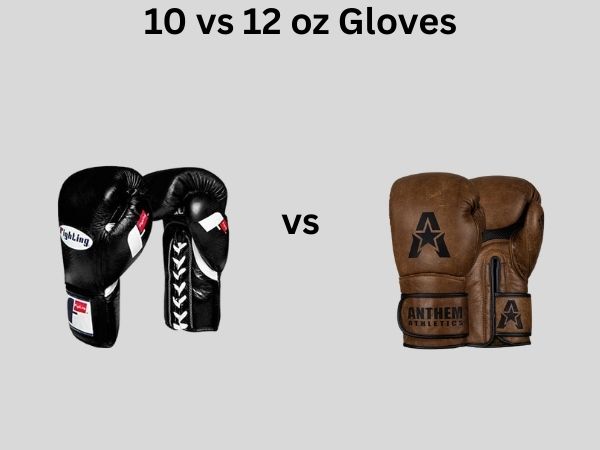
10 vs 12 oz Gloves: A Complete Comparison Guide for Every Fighter
When you’re stepping into the ring or starting your boxing journey, one of the first decisions you’ll face is choosing between 10 oz and 12 oz gloves. It might seem like a minor detail—after all, we’re only talking about two ounces of difference—but trust me, this choice can significantly impact your training experience, performance, and safety. Let me walk you through everything you need to know about these two popular glove weights.
Understanding Boxing Glove Weights and What They Mean
Before we dive into the comparison, let’s establish what those numbers actually represent. When we talk about 10 oz or 12 oz gloves, we’re referring to the total weight of a single glove, measured in ounces. These weights aren’t arbitrary—they’re carefully standardized to serve different purposes within the boxing world.
Think of glove weight like choosing between a sports car and a sedan. Both get you where you need to go, but the experience and performance characteristics are distinctly different. The heavier the glove, the more material you’re carrying on your hands, which affects everything from how fast you can move to how much force you’re absorbing with each punch.
The boxing industry has established these weight categories for good reasons rooted in safety, fairness, and training methodology. Lighter gloves generally offer less padding, while heavier ones provide more cushioning and protection.
The Key Differences Between 10 oz and 12 oz Gloves
What Those Two Ounces Really Mean
Now, two ounces might not sound like much—it’s roughly the weight of a couple of tennis balls—but when those ounces are strapped to your hands and you’re throwing hundreds of punches, you absolutely feel the difference. This additional weight is distributed through extra padding, particularly around the knuckle area and the back of the hand.
The 12 oz glove essentially gives you more material to absorb impact, while the 10 oz glove is more streamlined and responsive. If you’ve ever worn a heavy winter coat versus a light jacket, you understand this principle. The heavier option restricts movement slightly but offers more protection, while the lighter option feels more natural but leaves you more vulnerable.
Padding Distribution Differences
The extra two ounces in 12 oz gloves doesn’t just appear randomly—manufacturers strategically place this additional padding. You’ll typically find more cushioning in:
- The knuckle region (the striking surface)
- The back of the hand (where you absorb incoming punches)
- The wrist support area
- The palm region for general impact distribution
In contrast, 10 oz gloves trim down this padding while still maintaining the essential protection areas. It’s about optimization rather than elimination.
Padding and Protection: Which Offers Better Defense?
Protection for Your Hands and Face
Here’s where things get important for your safety. Twelve ounce gloves provide superior protection in several ways. The increased padding means more force distribution when you take a punch, reducing the impact on your hands and the potential for injury. If you’re training with partners who hit hard or if you’re focused on defense and head movement, the extra protection becomes invaluable.
Ten ounce gloves, while still protective, offer less cushioning. This doesn’t mean they’re unsafe—professional boxers use 8 oz gloves in competition—but they do require more experience and better technique to avoid cumulative hand injuries from repeated impact.
Think about it this way: if someone throws a ball at you, you’d prefer it to land on a pillow rather than a thin mattress. The thicker padding of 12 oz gloves is that extra pillow.
Wrist Support and Stability
The additional material in 12 oz gloves often translates to better wrist support. Many 12 oz models feature more extensive padding around the wrist and forearm connection, providing greater stability during punch execution. This becomes particularly important for beginners who haven’t yet developed the muscle memory for proper form.
Ten oz gloves offer adequate wrist support for experienced fighters with solid technique, but beginners might feel less stability with the lighter option.
Speed and Hand Movement Comparison
The Speed Advantage of 10 oz Gloves
If protection is the 12 oz glove’s strong suit, then speed is the 10 oz glove’s superpower. The lighter weight means less inertia to overcome with each punch. Your hands respond more quickly, your combinations flow more naturally, and your overall hand speed increases noticeably.
Have you ever tried moving around while wearing a heavy backpack versus carrying nothing? The difference is immediately apparent. Ten ounce gloves feel more like an extension of your arms rather than additional weight you’re carrying.
For drill work, combinations training, and speed-focused workouts, many boxers prefer the 10 oz option because it allows them to work at higher velocities and develop faster muscle memory.
Sluggish Movement with Heavier Gloves
This doesn’t mean 12 oz gloves make you slow, but they do require more effort to accelerate and decelerate. Your punches take slightly longer to land because you’re moving more mass. The tradeoff is that when that heavier glove connects, it carries more force and impact behind it.
Professional fighters often accept this slight speed reduction because the improved protection and power generation justify the exchange. For training purposes, many choose 12 oz specifically because the increased resistance helps build strength and endurance.
Who Should Choose 10 oz Gloves?
The Ideal Candidate for Lighter Gloves
If you fall into any of these categories, 10 oz gloves might be your sweet spot:
- You’re an experienced boxer with excellent hand and wrist technique
- You primarily focus on speed and combination work
- You have smaller hands and find 12 oz gloves uncomfortable
- You’re training specifically for competition at the 10 oz weight class
- You prefer the feel of lighter, more responsive equipment
- You’re doing mitt work or pad training with skilled trainers
- You want to build hand speed and reflexes
The key factor here is experience. Boxers with solid fundamentals can handle the reduced padding because their technique prevents injury. They know how to throw proper punches, maintain correct hand positioning, and absorb impact safely.
Training Goals That Favor 10 oz
If your primary goal is developing speed, working on intricate combinations, or preparing for competition in a lighter weight class, 10 oz gloves provide the best training environment. They prepare your hands for the actual gloves you’ll wear in the ring, making your transition to competition seamless.
Who Should Choose 12 oz Gloves?
The Perfect Choice for Most Boxers
Twelve ounce gloves represent the middle ground—they’re often called the “Goldilocks” choice because they’re just right for many situations:
- You’re new to boxing and still developing proper technique
- You want maximum safety and hand protection during training
- You train frequently and want to minimize cumulative hand stress
- You spar regularly and appreciate the extra cushioning
- You have larger hands that feel cramped in 10 oz gloves
- You’re working with heavy bags and want sustained padding
- You prioritize injury prevention over speed development
There’s a reason 12 oz gloves are the most commonly recommended choice for beginners. The training environment is safer, the gloves are more forgiving, and they allow you to focus on learning proper form without worrying excessively about hand injuries.
Long-Term Training Benefits
For boxers who train multiple times per week, the cumulative impact on your hands is substantial. Twelve ounce gloves spread this impact over more padding, reducing the risk of chronic hand problems that can develop from years of boxing. It’s an investment in your long-term health and ability to continue boxing throughout your life.
Training vs. Competition Glove Selection
Why Training and Competition Gloves Differ
Here’s something crucial that many beginners don’t understand: your training gloves don’t have to match your competition gloves exactly. In fact, many professional boxers train in heavier gloves than they compete in, using the increased resistance as a training tool to build strength and endurance.
Think of it like training with weighted clothing. You might run while wearing a weighted vest to build strength, knowing you’ll remove it during the actual race. Similarly, training in 12 oz gloves when you’ll compete in 10 oz develops your conditioning and power in a way that gives you advantages when you step into the ring with lighter gloves.
Strategic Training Approach
Many advanced boxers follow this pattern:
- Heavy bag work: 12 oz gloves for maximum protection
- Mitt work: 10 oz gloves for speed and responsiveness
- Sparring: 12 oz or 14 oz for safety, depending on intensity
- Competition preparation: Specific gloves matching competition weight
This varied approach develops different aspects of your boxing while managing fatigue and injury risk appropriately.
Impact on Technique and Form
How Glove Weight Affects Your Mechanics
The weight you carry on your hands directly influences your technique development. Heavier gloves force you to maintain better form because improper technique becomes immediately fatiguing. You can’t get away with sloppy punches when you’re carrying extra weight.
This is actually beneficial for beginners. The 12 oz glove teaches you discipline and forces you to develop efficient movement patterns. Your muscles learn the correct technique through the increased resistance.
Speed Development with Lighter Gloves
Conversely, 10 oz gloves allow you to develop speed without the resistance. Your nervous system learns faster firing patterns, and your muscle memory becomes calibrated for rapid hand speed. This is valuable when you’re specifically working on speed drills and combination work.
The ideal approach involves using both weights strategically to develop different aspects of your boxing ability.
Cost Considerations and Value
Price Differences Between Weights
Generally speaking, 12 oz gloves and 10 oz gloves from the same manufacturer are similarly priced. The weight difference doesn’t dramatically affect production costs. However, you might find that 12 oz gloves have slightly more brand options and availability in certain markets, which can affect pricing.
Where the real cost difference emerges is in durability. More padding means more material to wear through, but it also means better protection of that padding from compression and damage. It’s not a dramatic difference, but 12 oz gloves sometimes last slightly longer under heavy use.
Budget-Friendly Recommendations
If you’re just starting out with a limited budget, I’d recommend investing in quality 12 oz gloves from a reputable brand rather than cheap 10 oz gloves. The protection and durability justify the investment for your long-term boxing health.
Breaking In Your New Gloves
The First Few Sessions Matter
New gloves, regardless of weight, require a break-in period. Your hands need to adjust to the specific feel and responsiveness, and the padding needs time to settle and compress slightly into its final form.
Here’s what to expect:
- First few sessions: Gloves will feel slightly stiff and uncomfortable
- After 5-10 hours of use: Padding begins to settle and conform to your hand shape
- After 20+ hours of use: Gloves reach their optimal feel and responsiveness
- Beyond 50 hours: Padding begins compressing noticeably (normal wear)
The break-in period is the same for both 10 oz and 12 oz gloves. The difference is that 12 oz gloves have more padding to compress, so the adjustment period might feel slightly more dramatic as the padding settles.
Common Mistakes When Choosing Glove Weight
Error #1: Choosing Based Solely on Weight
People sometimes think heavier automatically means better protection, or lighter means faster is better. The reality is more nuanced. A well-made 10 oz glove might protect better than a poorly-made 12 oz glove. The manufacturer, design, and padding quality matter tremendously.
Error #2: Ignoring Your Hand Size
Smaller hands might feel cramped and uncomfortable in 12 oz gloves, while larger hands might find 10 oz gloves feel undersized. Your comfort and proper fit matter more than the theoretical advantages of either weight.
Error #3: Not Considering Your Experience Level
Beginners choosing 10 oz gloves because they want to feel “more professional” often regret it when their hands start aching. Let your experience level guide the decision, not your ego.
Error #4: Neglecting to Try Before Buying
If possible, try both weights at a gym or with a friend before making your purchase. The feel difference is noticeable, and what works for someone else might not work for you.
Expert Recommendations Based on Experience Level
Beginner Boxers (0-6 months)
I consistently recommend 12 oz gloves for anyone new to boxing. Your priority should be learning proper form, developing safety habits, and building foundational skills. The extra protection helps ensure you can train frequently without hand injuries interrupting your progress.
Intermediate Boxers (6-18 months)
Once you’ve developed solid technique and your hands have adapted to boxing’s demands, you have more flexibility. Many intermediate boxers use 12 oz for heavy bag work and sparring, then transition to 10 oz for mitt work and speed drills.
Advanced Boxers (18+ months)
Advanced boxers often use both weights strategically, with 10