5 Mil vs 7 Mil Gloves: Full Comparison
When choosing between 5 mil and 7 mil gloves, the main difference comes down to durability and protection. 7 mil gloves offer a thicker, more robust barrier, making them ideal for tasks involving sharper objects or stronger chemicals where extra protection is needed. 5 mil gloves are thinner and more flexible, providing a good balance of dexterity and protection for everyday use.
Understanding the mil measurement helps you select the right glove for your job. Mil refers to the thickness of the glove material, measured in thousandths of an inch. A higher mil number generally means a tougher, more resistant glove, but it can sometimes sacrifice the tactile feel you might get from a thinner option. We found that matching glove thickness to task risk is key.
- 7 mil gloves are thicker and offer superior protection.
- 5 mil gloves are thinner and provide better dexterity.
- Mil measures glove thickness in thousandths of an inch.
- Choose based on the level of risk and need for touch sensitivity.
Let’s break down the specifics of 5 mil versus 7 mil gloves so you can pick the perfect pair for your needs.
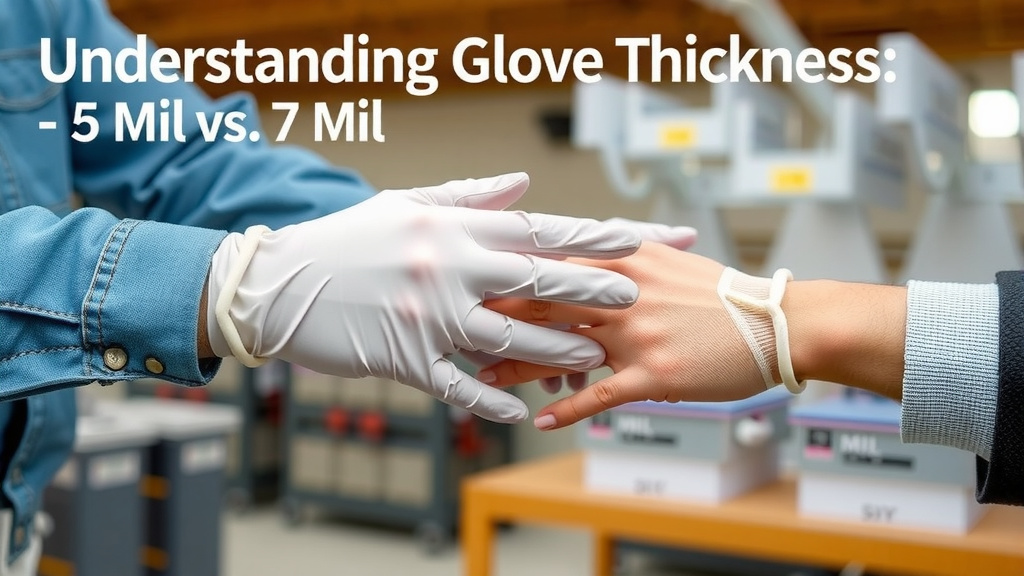
Understanding Glove Thickness: 5 Mil vs. 7 Mil
Choosing the right disposable gloves is about more than just finding a pair that fits. The thickness, measured in mils, plays a big role. You’ve probably seen “5 mil” and “7 mil” on boxes. But what does that actually mean for you and your work?
Simply put, mil refers to the thickness of the glove material. One mil is one-thousandth of an inch. So, a 5 mil glove is 0.005 inches thick. A 7 mil glove is 0.007 inches thick. This small difference can make a big impact on protection and how you use the gloves.
The Key Differences: Protection vs. Dexterity
When you’re trying to decide between 5 mil and 7 mil gloves, think about the job you’re doing. Are you working with something that might poke or tear the glove easily? Or do you need to feel very fine details with your fingertips?
What 7 Mil Gloves Offer You
A 7 mil glove is noticeably thicker than a 5 mil glove. This extra thickness translates directly to greater resistance to punctures and tears. We found that many professionals prefer 7 mil gloves for tasks where the risk of damage is higher.
Think about handling sharp objects or working with abrasive materials. A 7 mil glove provides a more robust shield against these hazards. It can also offer better protection against certain chemicals. If your work involves exposure to stronger substances, research shows that thicker gloves can be more reliable (CDC).
These gloves might feel a bit stiffer. Some people find they have slightly less tactile sensitivity. But for many jobs, that trade-off is well worth the enhanced safety. You get a more confident grip and peace of mind knowing your hands are better protected.
What 5 Mil Gloves Offer You
On the other hand, 5 mil gloves are the workhorse for many everyday tasks. They offer a good balance between protection and dexterity. Because they are thinner, you can often feel more with your fingertips while wearing them.
This makes 5 mil gloves ideal for jobs where you need precision. Examples include food service, light industrial work, or cleaning. You can still perform tasks requiring a delicate touch without a major loss of sensation. This is important for everything from handling small parts to preparing food.
While they offer good protection for general use, they aren’t typically recommended for heavy-duty applications involving sharp tools or harsh chemicals. We found that for routine tasks, 5 mil gloves are often the most cost-effective and practical choice.
Comparing Performance in Different Scenarios
Let’s look at how these two glove thicknesses stack up in real-world situations. The best choice often depends on the specific demands of your work environment.
Puncture and Tear Resistance
Research consistently shows that thicker gloves offer better resistance to physical damage. A 7 mil glove is much less likely to tear or puncture than a 5 mil glove when faced with sharp edges or abrasive surfaces. If your work involves frequent contact with potentially damaging items, the added durability of 7 mil is a clear advantage.
Chemical Resistance
When it comes to chemicals, thickness matters, but so does the glove material itself. However, for many common solvents and cleaning agents, a thicker glove generally provides a longer breakthrough time. This means the chemical takes longer to seep through the glove material. Many safety guidelines suggest that thicker nitrile or neoprene gloves offer better protection against a wider range of chemicals (NIH).
So, if you’re regularly handling disinfectants, solvents, or other potentially harsh substances, a 7 mil glove might offer you a more reliable barrier. Always check the chemical resistance chart for the specific chemical you are working with, regardless of glove thickness.
Dexterity and Tactile Sensitivity
This is where the 5 mil glove often shines. Its thinner construction allows for greater flexibility and a more direct feel of the objects you’re handling. If your job requires fine motor skills, such as assembling small components, performing intricate medical tasks, or even just feeling the texture of different materials, the 5 mil glove will likely feel more comfortable and allow for more precise movements.
Some users report that 7 mil gloves can feel a bit bulky. This can make delicate tasks more challenging. However, advancements in glove manufacturing mean that even 7 mil gloves offer good flexibility compared to older, thicker materials.
Comfort and Fit
Comfort is subjective and depends on individual preference. Some people find the added thickness of 7 mil gloves provides a more secure, reassuring feel. Others prefer the lighter, more form-fitting feel of 5 mil gloves for extended wear.
Both 5 mil and 7 mil gloves are commonly made from nitrile, latex, or vinyl. The material plays a significant role in comfort, stretch, and allergen potential. We found that fit is paramount for comfort and effectiveness, regardless of mil thickness. A glove that is too tight or too loose will hinder your work and can increase the risk of tearing.
Making Your Choice: A Quick Checklist
Still on the fence? Let’s boil it down. Ask yourself these questions to guide your decision:
- What are the primary risks? (e.g., sharp objects, chemicals, general contact)
- How important is tactile sensitivity? (e.g., delicate assembly vs. rough handling)
- What is the duration of use? (e.g., short, frequent tasks vs. long-term wear)
- What specific substances might I encounter? (Consult chemical resistance data)
- What is my budget? (Thicker gloves may cost slightly more per pair)
- What do the experts recommend for my industry? (e.g., healthcare, automotive, food)
Glove Thickness Comparison Table
Here’s a simple breakdown to help you visualize the differences:
| Feature | 5 Mil Gloves | 7 Mil Gloves |
|---|---|---|
| Thickness | Standard (0.005 inches) | Thicker (0.007 inches) |
| Puncture/Tear Resistance | Good for general use | Excellent for higher risk |
| Dexterity/Feel | High, allows for fine touch | Moderate, may reduce some sensitivity |
| Chemical Resistance | Adequate for light exposure | Better for moderate exposure |
| Typical Uses | Food prep, cleaning, light assembly, salons | Mechanics, industrial cleaning, healthcare, handling rough materials |
| Comfort | Lightweight, flexible | More robust, reassuring |
Conclusion
You’ve learned that the choice between 5 mil and 7 mil gloves really boils down to your specific needs. 7 mil gloves offer superior protection against punctures and chemicals, making them ideal for riskier jobs. On the flip side, 5 mil gloves provide excellent dexterity and tactile sensitivity, perfect for tasks requiring a delicate touch. Think about the primary risks of your work and how important it is to feel fine details. Consider these factors to make your best decision. Now, head to the store or your preferred online supplier and pick the right gloves to keep your hands safe and effective.
Frequently Asked Questions
Are 7 mil gloves always better than 5 mil gloves?
Not necessarily. While 7 mil gloves offer better protection against punctures and tears, 5 mil gloves provide more dexterity. The “better” glove depends entirely on the task you’re performing. For delicate work, 5 mil might be preferable; for heavy-duty tasks, 7 mil is often the safer bet.
Can I use 5 mil gloves for handling mild chemicals?
Yes, 5 mil gloves are generally suitable for handling mild chemicals and cleaning solutions for short periods. However, if you’re dealing with stronger solvents or chemicals, or if you’ll have prolonged exposure, research indicates that 7 mil gloves or specialized chemical-resistant gloves would offer better protection.
Will 7 mil gloves make my hands sweat more?
Some users find that thicker gloves like 7 mil can feel warmer and potentially lead to more sweating because they are less breathable. The material of the glove (nitrile, latex, vinyl) and the fit also play a big role in comfort. For extended wear, ensure a good fit to minimize discomfort.
Which type of glove is better for food handling, 5 mil or 7 mil?
For most general food handling tasks, 5 mil gloves are often preferred. They offer sufficient protection and allow for better dexterity and tactile sensitivity, which is helpful when preparing or serving food. If you’re handling potentially sharp food items, 7 mil might offer a bit more peace of mind.
Is there a big price difference between 5 mil and 7 mil gloves?
Typically, 7 mil gloves tend to be slightly more expensive than 5 mil gloves due to the extra material used. However, this price difference is usually not substantial, especially when buying in bulk. The added protection of 7 mil gloves can often justify the small extra cost for certain applications.