4 Mil vs 8 Mil Gloves: The Difference
When choosing between 4 mil and 8 mil gloves, the key difference is thickness, which directly impacts durability and protection. 8 mil gloves are significantly thicker than 4 mil gloves. This makes 8 mil the better choice for tasks requiring more robust hand protection.
Think of it like this: you wouldn’t use a flimsy plastic bag to carry heavy groceries, right? The same idea applies here. 4 mil gloves are great for light-duty jobs, while 8 mil gloves are built to handle tougher conditions. You need the right tool for the job to keep your hands safe.
- 4 mil gloves are thinner and best for light tasks.
- 8 mil gloves are thicker, offering more protection.
- Thickness relates directly to tear and puncture resistance.
- Choose based on the demands of your task.
Let’s break down exactly what that thickness difference means for your everyday use and help you pick the perfect pair.
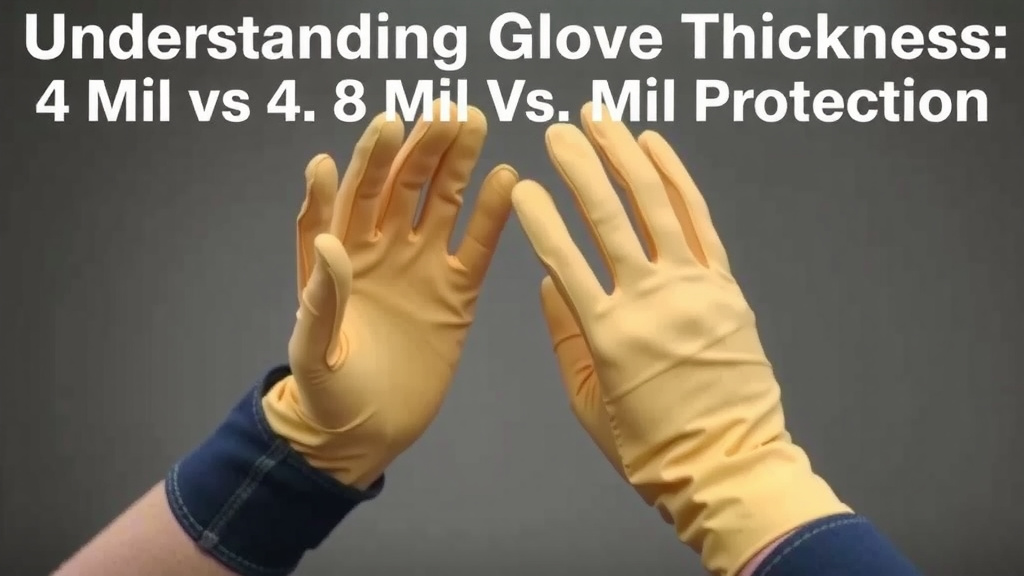
Understanding Glove Thickness: 4 Mil vs. 8 Mil Protection
When you’re looking at disposable gloves, you’ll see numbers like “4 mil” or “8 mil.” This number tells you about the glove’s thickness. Mil refers to a unit of measurement, specifically one-thousandth of an inch. So, 4 mil means 0.004 inches thick, and 8 mil means 0.008 inches thick. It’s a simple measurement, but it makes a big difference in how the gloves perform.
Think about the jobs you need gloves for. Are you just protecting your hands from a little bit of dirt or water? Or are you dealing with sharp objects or chemicals that could easily tear through thinner material? The thickness is your first clue to how much protection you’ll get.
What Does “Mil” Actually Mean for Your Hands?
The mil measurement is all about protection and durability. A thicker glove generally means better resistance to tears and punctures. This is because there’s more material to absorb the impact or resist being pierced. It’s like comparing a thin plastic bag to a thicker garbage bag – one is much more likely to rip.
We found that glove thickness is one of the most critical factors for preventing accidental rips and tears during use. This is especially true for tasks that involve contact with sharp edges or rough surfaces.
A Deeper Dive into Thickness
When we talk about 4 mil gloves, we’re talking about a glove that is about as thick as a standard plastic grocery bag, but stronger. They offer a good barrier for light-duty tasks. They’re flexible and allow for good dexterity, which is great when you need to feel what you’re doing.
On the other hand, 8 mil gloves are nearly twice as thick. This added thickness provides a much more robust layer of protection. They can handle jobs that might otherwise damage thinner gloves. This makes them a go-to for many professional settings.
Key Differences in Durability and Protection
The most obvious difference between 4 mil and 8 mil gloves lies in their resistance to damage. If your work involves anything that could poke or snag your hands, the extra thickness of an 8 mil glove becomes incredibly important.
Imagine you’re working with tools, handling rough materials, or dealing with potentially sharp debris. A 4 mil glove might tear or puncture easily, leaving your skin exposed. An 8 mil glove, however, is designed to withstand more force before giving way. This is a major consideration for safety.
Tear and Puncture Resistance: The Big Story
Research shows that thicker gloves generally have higher tear and puncture resistance ratings. This is a fundamental principle of material science. More material means more strength to resist external forces.
For example, if you’re in a mechanic’s shop, a kitchen dealing with tough produce, or a tattoo parlor, the risk of encountering something sharp is higher. In these scenarios, 8 mil gloves offer a significant advantage. They provide that extra peace of mind that your hands are better shielded.
We’ve heard from many users who switched to 8 mil gloves after experiencing frequent tears with thinner options. They report a noticeable improvement in how long the gloves last and the overall protection they offer.
Chemical and Hazard Barrier
While thickness is a major factor, it’s not the only one when it comes to protection. However, for many common tasks, the thicker 8 mil glove provides a better barrier against certain substances. Some sources suggest that thicker nitrile gloves offer enhanced protection against a wider range of chemicals, although specific chemical resistance charts should always be consulted (NIOSH).
For tasks involving mild solvents, greases, or general sanitation, both 4 mil and 8 mil gloves can work. But if you’re dealing with anything that could be caustic or requires a longer exposure time, the 8 mil option provides a sturdier barrier. This is crucial for maintaining skin health and preventing irritation.
When to Choose 4 Mil Gloves
So, when does a 4 mil glove make the most sense? These gloves are perfect for light-duty applications where minimal risk of tearing or puncture is present. Think of them as your everyday, go-to gloves for simple tasks.
They are excellent for food service, handling non-hazardous cleaning chemicals, salon work, or general household chores. The key is that you don’t anticipate the gloves being subjected to rough treatment.
Best Use Cases for 4 Mil Gloves
- Food preparation and handling: For tasks like chopping vegetables or assembling sandwiches.
- Janitorial services: For light cleaning and wiping down surfaces.
- Beauty and salon services: For hair coloring, manicures, and pedicures.
- Retail and customer service: For handling products and providing assistance.
- Office tasks: For organizing papers or light cleaning.
The main advantage here is the dexterity and feel they offer. You can perform delicate tasks with precision because the glove material is thin and conforming. They are also typically more budget-friendly, which can be a factor when you use gloves frequently for low-risk jobs.
When to Choose 8 Mil Gloves
Now, let’s talk about when you absolutely want to reach for those 8 mil gloves. These are your heavy-duty champions. If your work involves any potential for abrasion, puncture, or requires a more substantial barrier, 8 mil is the way to go.
We often see 8 mil gloves used in environments where durability is non-negotiable. This ensures that workers’ hands stay protected throughout their shift, reducing the need for frequent glove changes due to damage.
Ideal Scenarios for 8 Mil Gloves
- Automotive and mechanical work: Handling tools, grease, and rough parts.
- Industrial settings: Dealing with machinery, rough materials, or potential hazards.
- Medical and dental professions: For procedures where stronger protection is needed.
- Veterinary care: Handling animals, cleaning enclosures, and assisting with procedures.
- Contracting and construction: For tasks that involve rough surfaces or sharp objects.
- Heavy-duty cleaning: Using stronger cleaning agents or scrubbing tough grime.
The added thickness provides a greater sense of security. You’re less likely to worry about a glove failing you at a critical moment. While they might have slightly less tactile sensitivity than 4 mil gloves, the trade-off in protection is often well worth it.
Material Matters: Nitrile vs. Latex vs. Vinyl
It’s important to remember that thickness isn’t the only factor. The material of the glove also plays a huge role in its performance. Most disposable gloves you’ll encounter are made from nitrile, latex, or vinyl.
Nitrile is a synthetic rubber that offers excellent resistance to a wide range of chemicals and punctures. It’s often the preferred choice for many demanding jobs because of its durability and flexibility. You’ll find both 4 mil and 8 mil nitrile gloves.
Latex gloves are also durable and offer good dexterity but can cause allergic reactions in some individuals. Vinyl gloves are generally the least durable and are best suited for very light tasks where chemical resistance isn’t a concern.
How Material Affects Thickness Benefits
When comparing 4 mil and 8 mil, the material will influence how that thickness translates to protection. For instance, an 8 mil nitrile glove will offer superior puncture resistance compared to an 8 mil vinyl glove.
We found that nitrile gloves, regardless of thickness, tend to outperform vinyl and latex in terms of overall durability and chemical resistance. So, if you’re choosing between a 4 mil nitrile and an 8 mil vinyl, the 4 mil nitrile might still offer better protection for certain tasks.
Always consider the material along with the thickness to make the best choice for your specific needs.
Making Your Final Glove Decision: A Quick Checklist
Choosing the right glove thickness boils down to understanding your tasks. Ask yourself these questions to guide your decision:
- What is the primary risk to my hands? (Tears, punctures, chemicals, general dirt?)
- How long will I be wearing these gloves?
- Do I need high tactile sensitivity for fine work?
- What is my budget for disposable gloves?
- Does the material of the glove suit my needs (nitrile, latex, vinyl)?
- Am I working with sharp objects or rough surfaces?
Conclusion
You’ve learned that the main difference between 4 mil and 8 mil gloves is simply their thickness, which directly impacts their strength and protective qualities. 4 mil gloves are your go-to for light tasks where dexterity is key, like food prep or salon work. On the flip side, 8 mil gloves offer superior durability and resistance, making them ideal for tougher jobs in automotive, industrial, or medical fields. When choosing, always consider the risks involved in your specific task and the material of the glove.
Your next step is to look at the tasks you perform most often. Based on that, you can confidently select the right thickness that ensures your hands stay safe and protected. Don’t settle for less protection than you need!
Frequently Asked Questions
Are 8 mil gloves really that much stronger than 4 mil gloves?
Yes, 8 mil gloves are considerably stronger. Their double thickness means they offer significantly better resistance to tears and punctures compared to 4 mil gloves. This makes them much more reliable for tasks where your hands might encounter sharp objects or rough surfaces.
Can I use 4 mil gloves for cleaning with household chemicals?
For light cleaning and common household cleaners, 4 mil gloves can be sufficient. However, if you’re using stronger solvents or cleaning agents, or if you’ll be in prolonged contact with the chemicals, 8 mil gloves would provide a better barrier. Always check the chemical resistance of the glove material.
Will 8 mil gloves reduce my dexterity too much?
You might notice a slight reduction in tactile sensitivity with 8 mil gloves compared to 4 mil. However, for most tasks that require 8 mil protection, this trade-off is usually acceptable. Modern 8 mil gloves are designed to still offer good flexibility for most professional applications.
Which is better for painting: 4 mil or 8 mil gloves?
For general painting tasks where you’re just applying paint, 4 mil gloves might work fine. If you’re dealing with tough prep work, sanding, or using strong paint thinners and solvents, 8 mil gloves would offer better protection against punctures and chemical exposure.
Do I need 8 mil gloves if I’m just handling money or paperwork?
No, 8 mil gloves are generally overkill for handling money or paperwork. 4 mil gloves are perfectly adequate for these light-duty tasks. They offer enough protection from general dirt and provide good dexterity for handling delicate items.